
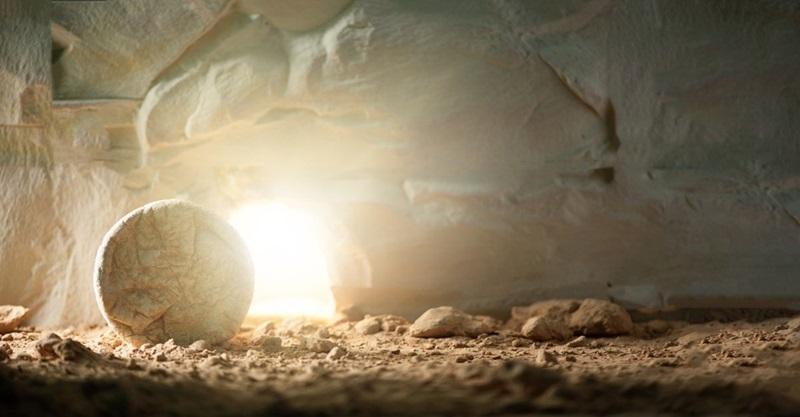
The Stone is Rolled Away from the Tomb
The Stone is Rolled Away from the Tomb
And he said to them, ‘Do not be alarmed. You seek Jesus of Nazareth, who was crucified. He has risen; he is not here. See the place where they laid him.’
Mark 16:1-8
All four gospels – Matthew, Mark, Luke, and John – devote a large part of their gospel writing to the final week of Jesus Christ’s life. Clearly, his suffering, death, and resurrection is important. All four gospels also give an account of the women who went early to the tomb on Sunday morning. As many as seven women went out in the wee hours of the Sunday morning, after the Sabbath rest was officially over, and well before it was even light. They were on their way to Jesus’s tomb, fully equipped with spices, perfume, and ointments.
While the men had scattered in every direction when their master was arrested, the women were glued to Jesus Christ’s every move and to everything that happened to him. There is an old, well-known question: “Were you there when they crucified my Lord?” The women were there. They were at his death; they saw the soldiers thrust their spear in the Master’s dead body; they saw his lifeless body pried from the cruel spikes of the cross; they followed all the way to the tomb of Joseph of Arimathea and watched his burial. They loved him so much; all their hopes and fears had been wrapped up in him; there was nothing that could tear them away from even that final and irretrievable moment when his cold, lifeless body was laid in the tomb.
Some of the women are mentioned by name. They have stories to tell. There is Mary Magdalene: Jesus had driven seven demons from her. Another gospel account mentions Joanna: Jesus had healed her. These are sisters who had experienced in a very real, cruel, and horrible way the consequences of the fall into sin, a world that groaned in agony, a life which is no more than a constant death. The one experienced disease. The other was possessed by demons. What was this but a foretaste of an eternity of weeping and gnashing their teeth in the fires of hell? But Jesus Christ had delivered them from that. He had delivered them from the bondage of both disease and Satan. Could it be that he would deliver them perfectly and eternally from Satan, sin, and death, restoring them to a wonderful fellowship with God? This was their hope! Had been! Those hopes and dreams are now dashed. They are now paying their last respects. This was no easy journey that Sunday morning by the seven women. It was the most heart-rending and troubling journey of their lives. They were saying goodbye to the one in whom they had placed all their hope!
But when the women came near the tomb, they saw that the stone had been rolled back. The significance of this stone rolled away is not immediately apparent to the women. They enter the tomb. Luke tells us they looked for the body of Jesus, but couldn’t find it. They started to panic. That’s when the young man dressed in a white robe, an angel, announced to the women, “Do not be alarmed. You seek Jesus of Nazareth, who was crucified. He has risen; he is not here. See the place where they laid him.” The significance of the open tomb is now made quite clear: Jesus Christ has been raised from the dead!
It was a lot to take in for these amazing women. But their former hope was being rekindled. Our hope is stirred up! The empty tomb and the resurrected body of Jesus Christ demonstrated that he had crushed Satan’s power, paid for our sins, reconciled us to God, and gave us the hope of the resurrection from the dead and life everlasting. Jesus had drunk from the cup that his Father gave him, and now he was moving forward, on toward Galilee where he would reinstate his disciples and prepare them for the spreading of the gospel to the whole wide world.
For further study⤒🔗
- Why did no one seem to expect Jesus to rise from the dead, as he had predicted?
- Why would Mary Magdalene and Joanna’s story seem pointless in light of Jesus dying and not rising from the dead?
- How does Jesus Christ’s resurrection give comfort to you?
Add new comment