
Salvation by God’s Design
Salvation by God’s Design
After him was Shamgar the son of Anath, who killed 600 of the Philistines with an oxgoad, and he also saved Israel.
Judges 3:31
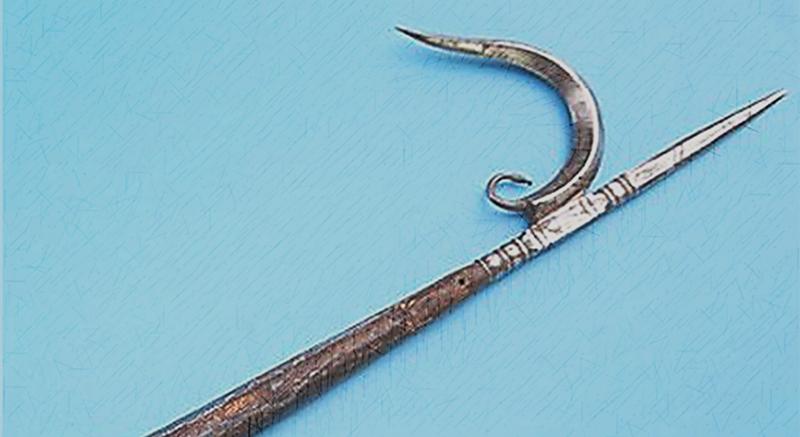
This passage, right on the heels of the narrative about the left-handed judge Ehud, is an earthy tale; it’s one of the raw parts of Scripture.
Who is this mysterious Shamgar, whose judgeship is recounted in just this one verse in the book? He is the first of the minor judges. His name is not a Hebrew name, which means he was most likely not an Israelite. And his identification as the son of Anath, “ben-Anath,” suggests he was devoted to the service of Anath, the Canaanite goddess of war. “Ben-Anath” was a widely used name in extrabiblical sources, applied to a troop of Egyptian mercenaries in Pharaoh’s army. So while Shamgar’s success against the Philistines, killing 600 of them with an oxgoad, benefitted the Israelites, he may not have been intentionally serving Israelite interests. It may have been a one-time benefit on an otherwise Egyptian campaign.
But the LORD who raised up Ehud as a deliverer accomplished the same with Shamgar, to save Israel. So what if Shamgar wasn’t an Israelite? The LORD can make use of foreigners only looking out for their own purposes to save his people, just as much as he can use left-handed Benjaminites like Ehud.
Shamgar’s weapon was not a sword or spear; it was an oxgoad, a tool for training stubborn oxen to be obedient. It was about eight feet long, up to six inches thick at one end, and pointed at the other. This is a most unlikely tool with which to kill 600 Philistines and save Israel. We do not know whether he did it all at once or killed only a few at a time. But again, that is not the point. Should we not see here the very glory of the LORD? Can’t he deliver his people as he sees fit, whether by a follower or a pagan? Is there not something so mysterious about a God like this?
God finds a way in seemingly hopeless situations to save his people. Who would have thought that God would continue the line of promise through Tamar, a Canaanite who was more faithful to her culture’s standards than Judah was to his? Who would have thought that God would deliver Moses from infanticide by having Pharaoh’s daughter rescue him? Who would have thought that God would’ve saved Israel through a lefty assassin like Ehud, or a pagan like Shamgar?
How much more salvation through Jesus Christ? Who would have thought that God Almighty would take to himself human flesh in the person of Jesus, be born of a virgin, for the purpose of saving us from our sins? He grew up with no form or majesty that should attract anyone to him (Isa 53:2-3). The LORD used him to accomplish the greatest salvation of all, through the humiliation and weakness of the cross. The gospel is all about the LORD choosing what is foolish to shame the wise, the weak to shame the strong. Christ’s crucifixion was unexpected for so many, and the ultimate act of foolishness to a pagan. But it was necessary; he needed to make a mockery of Satan and the evil powers. And he did! Not with an oxgoad, nor with a dagger. But with the shedding of his own blood. He was slaughtered for the salvation of his people.
The Bible is not all neat and tidy. Neither is the history of the church. God intervenes in surprising ways to deliver his people. Because salvation belongs to the Lord, who gave an oxgoad to Shamgar, a dagger to Ehud, horns and torches to Gideon, and a donkey’s jawbone to Samson. It’s God’s joy and delight to use the weak and foolish things of the world to shame the strong and wise. And therefore, it is our call to cling by faith to this God, to find rest in him, and to receive the strength to serve in his kingdom.
For Further Study⤒🔗
- Perhaps with the aid of a concordance, find out from elsewhere in the book the confirmation that Shamgar was known in Israel.
- How have you experienced the Lord’s use of unlikely instruments in your own life?
Add new comment