
Reformed Christian Education 2014: Floodlight or Candlelight?
Reformed Christian Education 2014: Floodlight or Candlelight?

Some light from Scripture⤒🔗
To unfold our theme, it may be helpful to ponder briefly the imagery of "light." Photometers are instruments that measure the strength of light in lumens, which is a term related to words like luminous, illuminate, and luminary. Obviously a floodlight gives more lumens than candlelight. And what, then, are some functions of light? Experience teaches us that among the purposes of light are these two: to dispel darkness and to enable work to be done.
There are two Scripture passages relevant to our subject, one that emphasizes the communal aspect of light-shining, the other emphasizing the individual aspect.
In Matthew 5:14-16 we read: "You are the light of the world. A city set on a hill cannot be hidden. Nor do people light a lamp and put it under a basket, but on a stand, and it gives light to all in the house. In the same way, let your light shine before others, so that they may see your good works and give glory to your Father who is in heaven" (ESV).
Note two things about these verses. First, because each "you" and "your" in these verses is plural, not singular, the metaphor of light (singular) refers not to the individual believer, but to the Christian community: "You (plural) are the light (singular) of the world." Together God's people are the light in the world, whose shining serves to dispel darkness and to enable work to be done. Second, the King James Version correctly renders the adverb (not as a comparison, as most newer translations have it): "Let your light so shine before men, that they may see your good works and glorify your father (who) is in heaven." That is, the Christian community must live in the world in such a way that its good works (i.e., their obedience) is visible and leads to people giving glorify to God.
The second Scripture passage relevant to our discussion is Philippians 2:14-16: "Do all things without grumbling or disputing, that you may be blameless and innocent, children of God without blemish in the midst of a crooked and twisted generation, among whom you shine as lights in the world, holding fast to the word of life, so that in the day of Christ I may be proud that I did not run in vain or labor in vain" (ESV).
Notice that here, the plural "you" is matched by the plural "lights," from which we learn that light-shining has an individual dimension as well. Each of us is a light in this dark world, called to dispel darkness around us and to enable work to be done.
In light of these two passages, we are willing (obligated?) to replace the conjunction "or" in our title with the word "and," since we don't want to play off the communal against the individual. In terms of Christian education, then, we wish to shine our communal light, as well as shine individual lights, into this world for the purposes of dispelling the darkness and enabling work to be done.
The calling of Reformed Christian education←⤒🔗
What does this mean concretely for the enterprise of Reformed Christian education?
First, we must be clear about the calling of Reformed Christian education. Among the alternatives here, some in Christian education emphasize the pursuit of academic and intellectual development. The outcome of this vision, in terms of educational process and goal, is to cultivate the life of the mind. Another alternative vision for Christian education involves the pursuit of technical and vocational development. Here, students will develop skills of applied knowledge. Yet a third alternative is to define the calling of Christian education as the pursuit of evangelism and piety; the outcome here involves the focus on antithetical relationships between Christianity and culture.

I would propose a fourth understanding of the calling of Reformed Christian education, one that is rooted in Heidelberg Catechism, Lord's Day 21, Q/A 55. This is what we read:
What do you understand by the "communion of saints"?
First, that believers, one and all, as members off the Lord Jesus Christ, are partakers with him in all his treasures and gifts; second, that each one must feel himself bound to use his gifts readily and cheerfully for the advantage and welfare of other members.
How does this relate to Reformed Christian education? The communion of the saints is both a gift and a calling that relates to all of life, including education. Surely there is a communal/individual financial dimension to this expression of identity, but my interest lies in the daily, "boots on the ground" practice of the Christian communal/personal identity within our schools.
Notice the emphasis, in this Catechism answer, on the "one and all" who are the subjects of this communion of the saints. This answer supplies us with a beautiful — and a normative — integration of the communal and the individual!
Specific goals←⤒🔗
Let's describe this alternative vision this way: "Reformed Christian education seeks, through its pedagogy, curriculum, and activities, the personal formation of students for future witness and service as God's new humanity living in God's world." Notice these key phrases, each having to do with the task of Reformed Christian education:
Personal formation: this refers to the formation of the whole person — mind, emotions, will — what Proverbs 4:23 identifies as the "heart"
- Witness and service: recall the two purposes of light: to dispel the darkness, and to enable work to be done; this phrase covers those callings
- God's new humanity: this is a description of communal identity that reaches back to creation
- God's world: this phrase embodies a confession of faith, hope, and love
This vision for Reformed Christian education involves the following goals (among others) for this formation:
- To enable students to trade in rules for principles, to transition from "have to" to "want to" as a philosophy of Christian living.
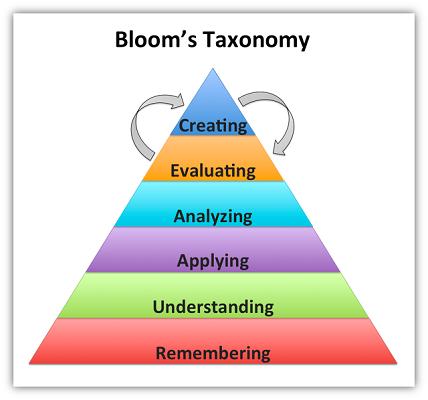
- To integrate all aspects of human personality, by employing our educational resources for the cultivation of knowing, feeling, and doing (think of Benjamin Bloom's taxonomy of learning domains).
- To energize the connection between learning and living, so that all knowledge gets applied, and only applied knowledge is cultivated.
Some samples←⤒🔗
(I want to emphasize that the following examples are merely samples, illustrations that seek to concretize the points made above. None is being recommended, none is viewed as infallible or normative. Each is designed to help us pursue the integration of our faith-confession and our learning.)
If Reformed Christian education is going to function as both floodlight and candlelight, then our schools need to foster a Christian identity that integrates both the communal and the individual. This fostering entails activities suited to goals and objectives consistent with that identity.
Let's consider specific activities relating to service to God, to God's people, and to God's world.
- Learn to appreciate the value of religious experience (service to God). Here, the school would provide space and time for cultivating religious expression, enlisting resource persons such as pastors, church elders, and parents. This requires scheduling exercises of devotional reflection and action (praying, singing, meditating, and discussing).
- Learn to value diversity within the Christian community (service to God's people). Here, the school would provide ways to celebrate diversity of learning abilities, physical abilities, and life circumstances within the school community, addressing ways to replace indifference with attention, bullying with assisting, and competition with cooperation. This may require off-campus activities like visiting rest homes, nursing facilities, or museums featuring foreign cultures and customs.
- Learn to approach living in God's world with faith rather than fear (service to God's world). Here, in an age-appropriate manner, the school would engage (as in: study, interact with) ideas, practices, and values that contradict the truths of Scripture and the Confessions, with a view to (1) equipping students to demonstrate both conviction and compassion, and (2) finding creative and compelling ways to live faithfully and servingly amid people who do not yet bend the knee to King Jesus.

In summary, within the Christian school-as-community, the confession that "each one must feel himself bound to use his gifts readily and cheerfully for the advantage and welfare of other members" must be translated into conduct and practice. Guided by teachers and embraced by their peers, students must learn to give, to serve, and to employ their gifts to meet others' needs. In this way, Reformed Christian education will best honour its calling to be both floodlight and candlelight.
Add new comment