
Infant Baptism in the Early Church
Infant Baptism in the Early Church
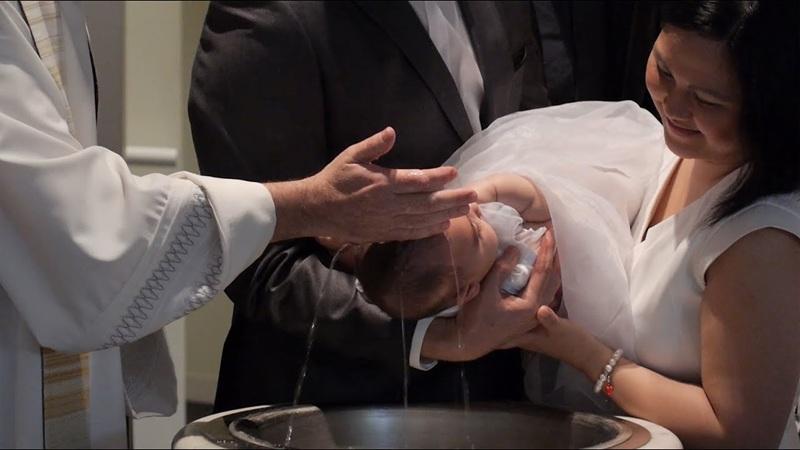
Christian unity among Protestants becomes strained on the issue of the baptism of children too young to speak or to understand the ceremony. Although it is firmly established among Reformed, Lutheran, and Anglican – and even Roman Catholics and the Eastern Orthodox – it is opposed as contrary to Scripture by Baptists and other denominations which trace their practice no further back than the sixteenth or seventeenth century.
Opponents of infant baptism make the following arguments: Infant baptism is not authorized in the New Testament; The Bible requires a living faith in Jesus and repentance to precede the sacrament; Young children are intellectually incapable of the required faith; Babies cannot tell right from wrong and hence cannot repent; All baptisms recorded in the New Testament are of believing adults. They claim their practice is more scriptural, but Calvinists who baptize children (paedobaptists) make the same claim for their own practice.
The paedobaptist Reformed often point to household baptisms in the Acts of the Apostles and a letter of Paul, which narrate that whenever a spouse/parent was converted and baptised, so were the rest of the family: Acts 10:44-48, 16:14-15, 16:30-34, 18:8; 1 Corinthians 1:16. The problem here is that the Bible does not explicitly state that any of the family members were under the age of discretion.
There is also Luke 18:15-17:
Now they were bringing even infants to him that he might touch them. And when the disciples saw it, they rebuked them. But Jesus called them to him, saying, “Let the children come to me, and do not hinder them, for to such belongs the kingdom of God. Truly, I say to you, whoever does not receive the kingdom of God like a child shall not enter it.”
This passage has led to many interpretations, one that Christ has already received little children and hence they do not need baptism, and on the other hand, the church should not forbid parents from bringing their babies to the baptismal font. In fact, the difference among denominations is all a matter of Scripture interpretation. How can we determine which interpretations and arguments are correct?
Consulting sources⤒🔗
Consulting early postbiblical Christian sources helps give us a better idea of the meaning or the most accurate meaning of New Testament teaching. The early non-canonical sources reveal the presuppositions shared by the New Testament personages and their original hearers, and thus disclose the interpretation and lesson that persons contemporaneous with the biblical writers were intended to draw from them.1

To avoid reading into the early Christian past, or any past, only what we want to see there, we must obtain knowledge of the real past, based on the best evidence obtainable of what that past really was. Drawing from sources originating centuries after the events can yield errors and misconceptions. Better evidence comes from people who were personally acquainted with the characters, thought, and events of the era, or at least not many hands removed from them. Thus, consulting the earliest nonbiblical sources about the New Testament is superior to consulting ones that came much later in time, in which there was opportunity for misconceptions, deceptions, unwarranted assumptions, and other errors to creep in and distort their perceptions and knowledge, or render them wildly incorrect.
It is more probable that the teaching of Jesus and his apostles was preserved among Christians who were contemporary with them or with the first few generations of Christians after them, instead of the true faith and practice disappearing around the death of the last apostle, then long afterwards being perfectly restored by Mohammed in the seventh century or by Joseph Smith of the Latter-Day Saints in the nineteenth. Similarly, it is infinitely more credible that the correct interpretation of the Bible was preserved by these early generations than suddenly lost and came to light over fifteen centuries later.
Where the early Christian authors agree among themselves, it must be concluded that their interpretations were made within a structure received from the apostles not many years earlier. A consensus of early Christian authors on a point indicates what all wings of the ancient church agreed on. The fact that they agreed on certain things indicates that these things were handed down intact from apostolic times, for if all had departed from the original faith, they would have evolved separately and randomly and thus contradicted each other on significant points.2
Such writings can often break the tie between two equally-probable mutually-incompatible interpretations of Scripture. It certainly does so on the issue of paedobaptism vs. Baptists, Pentecostals, Mennonites, and others.
Practice of the early church←⤒🔗
Churchmen in the first two centuries of Christianity spoke of the baptism of children as a given, and not a matter of dispute. The first was Irenaeus, who received Christian training from the pastor who was probably “the angel of the church in Smyrna” in Revelation 2:8, who in turn had been a disciple of the Apostle John. Irenaeus was later a pastor-bishop in France for many years. In the AD 180s, he wrote about the full humanity of Christ and the importance of this doctrine to readers, saying:
He came to save all through means of Himself — all, I say, who through Him are born again to God — infants, and children, and boys, and youths, and old men. He therefore passed through every age, becoming an infant for infants, thus sanctifying infants; a child for children, thus sanctifying those who are of this age, being at the same time made to them an example of piety, righteousness, and submission.3

Hippolytus’s writing dates to the first three decades of the third century, in the century after Irenaeus, and an overlapping generation after Tertullian. He was a prominent pastor-bishop near the city of Rome, and for about twenty years was a rival bishop of the city, the first “antipope.” Around AD 217 he compiled a compiled book drawing on earlier customs and routines, for the purpose of codifying the procedure for baptism and other church matters as they had descended from Christ’s first disciples. He meant it as a guide for clergy, and to enable laity to detect and rectify deviations from the heritage of the apostles. In describing the ceremony for group baptism, his book stated that the practice of church of his day, and presumably of the apostles, was to ask questions of the candidates about their faith and intended future practice. It stipulated: “The children shall be baptized first. All of the children who can answer for themselves, let them answer. If there are any children who cannot answer for themselves, let their parents answer for them, or someone else from their family. After this, the men will be baptized.”4
Baptism of babies is mentioned as a universal practice of the church around the turn of the 200s, as indicated even by a sectarian who opposed it. Tertullian had been a prominent lawyer in the city of Rome who, upon conversion to Christianity, became an elder in Tunisia. He was the most prolific ante-Nicene Christian author writing in Latin before Augustine, and is called “The Founder of Latin Christian Literature.” Partway through his writing career, he left the main body of the church and joined a sect that criticized the majority for moral laxity, lack of spiritual enthusiasm, slackness in religious observance, and for accepting the word of the established clergy instead of the revelations claimed by a prophet in the AD 170s. Tertullian’s books analyzed and contradicted the majority church, giving examples of where he thought it had gone wrong, often quoting its own words. While a dissident from the orthodox church, Tertullian advised against infant baptism on the principle that baptism cleanses from all previous sins. The church of his day imposed heavy penances for each individual sin committed after baptism to give proof that a backslider was really, thoroughly repentant.5 In fact, Tertullian counselled for delay in baptism at any age except in old age, when the possibility was remote of sinning further.6 By giving such advice, Tertullian indicated that baptism of children was already well established by the turn of the third century, even though some heretics thought it a bad idea. Their objection was not based on arguments that babies have never sinned, or are incapable of believing or of repenting, or that it is against the teaching of the apostles and New Testament, but because it increased the amount of mortifying the flesh and good works necessary for regaining a right standing with God and the church.
Toward the end of our period of study came Origen, who was the foremost Christian Bible scholar and teacher of the first half of the third century AD. He was the leading church father of his own day and influenced the church for centuries afterwards. In his Sermons on Joshua he said as an aside that his hearers were infants in baptism.7
Elsewhere, he wrestled with the problem of how babies could be baptised for the remission of sins when they did not know right from wrong and lacked the physical and mental ability to break God’s law.8 After discussing the matter, he concluded that infant baptism was right because the church had always done it and therefore it must have descended from the apostles.9
Thus, we witness what was a universal practice in the second and third centuries, but no record of when it began, and no word of a first instance of baptising a baby, or protest that it was an innovation. There is recorded opposition to the beginning of instituting special buildings for Christian public worship (“churches”) in the middle of the third century,10 but none against the beginning of infant baptism.
Add new comment