
Consider the City
Consider the City
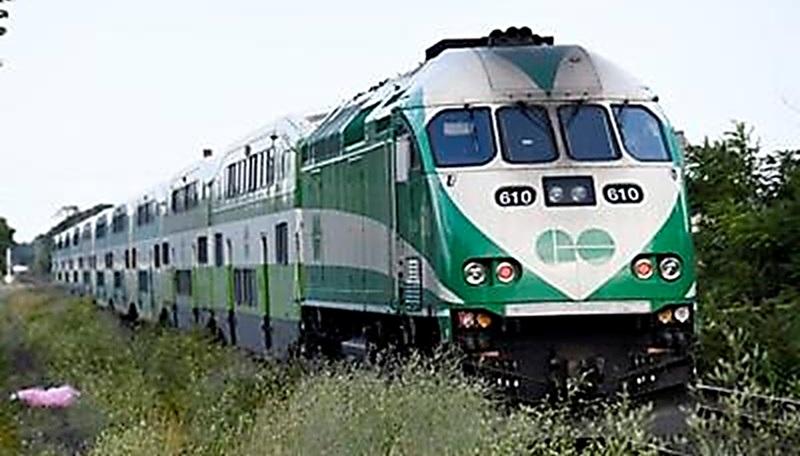
At 8 a.m. on a Monday morning, I stepped on the GO Train at Gromley Station, heading south to Union Station in Downtown Toronto. Being a terminal station (Richmond Hill, where I live is on the outskirts of the “city”), the train was empty when I boarded, but at each subsequent station it quickly filled up, with hundreds of people waiting to board. As the train snaked south, green valleys, river crossings, and pockets of forest whizzed by. For a moment, I wondered, “Was I heading into the city?” Then I remembered: railway lines tend to slither through small slivers of “green space” with valleys and trees shielding the view of the city. These spaces are small, but treasured, mementos of nature within city limits. Eventually, the greenery disappeared, and skyscrapers loomed beside railway lines as we approached Union Station.
Union Station in Toronto serves as transportation hub for subway, trains, streetcars, and buses. Over 200,000 people from every tribe, nation, and tongue spill through the Grand Hall on an average business day (pre-COVID). Above ground, trains and buses rumble in from the surrounding cities and towns to the inner city. Underground, the subway whisks by every two or three minutes, shuttling people throughout the inner city, until, like groundhogs, they pop out streetside into the urban centre next to work or home. An underground network of tunnels, shops, and food courts (the “PATH”) connect skyscrapers in the city centre – making it possible for a person to move about the city without ever braving the biting cold winds of winter.
As I burrowed out of Union Station, I was dwarfed by skyscrapers and crowded by thousands of image-bearers, all making their way somewhere to do something. It being a Monday, there was both a determinedness filling the air and an atmosphere of easy distraction that lingers over memories of the weekend. I made my way to Quantum Coffee, a well-known coffee shop advertised as, “a destination for quality coffee born out of a passion for connecting people and ideas.” There I sat down, paused, and reflected.
I escaped into the city and the city was magnificent. Iconically, soaring above the cityscape, the CN Tower reaches high into the sky. Tourists stand gazing upward, dwarfed in its shadow. Tickets are purchased, groups are herded into the elevator and whisked to the top. Up high, they stand on the 6 cm thick glass floor and stare 342 meters straight down. They circle the top of the viewing deck and look out to see an endless landscape of skyscrapers, condos, highways, and streets. An imaginative mind can visualize the entire subterranean city of tunnels, pipes, subways, sewers, foundations, and parking garages. Like roots of a tree, the city extends many meters below ground. Toronto, like many great cities, is a modern engineering marvel.
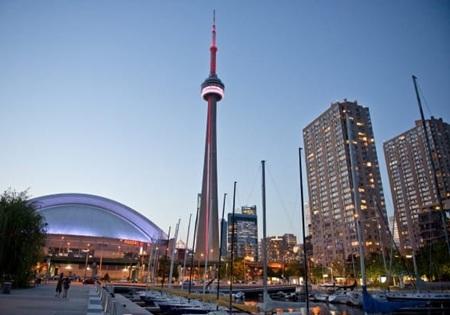
But engineering isn’t the only thing to marvel at in Toronto. At the Roy Thompson Hall, the Toronto Symphony Orchestra gives an exquisite, awe-inspiring performance of Handel’s Messiah. At the Scotiabank Arena, speed, agility, and reflex combine in another wizardly goal by Austin Matthews. At the Art Gallery of Toronto, exquisite artistry of colour and form capture the imagination and transport tourists to other realms. The Science Centre documents the work of great physicists, chemists, astronomers, and inventors.
And these are all finished products. We haven’t toured the countless creative meetings and brainstorming sessions where people are thinking, designing, creating, developing, composing, building, and practicing. In the city, people learn to work together, with diverse backgrounds and gifts, to produce works of wonder; a creative wonder made possible as image-bearers of a glorious God. In surveying the ancient engineering marvel at Babel, the LORD said, “If as one people speaking the same language, they have begun to do this, then nothing they plan to do will be impossible for them” (Gen 11:7, NIV). In the city, a small glimpse of the potential of humanity is seen.
And yet, like a hollowed-out pumpkin, there’s a profound sense of emptiness and rot, as if, despite all the striving of busy crowds, the glory is on verge of collapse. The magnificence is somehow missing the mark and lacks enduring quality (Ps 90:4-6).
As a pastor my life is devoted to declaring the glory of God among the nations. Yet how can we do so in a city where everything seems to cry out, “Come and see the glory of man! See the wonders he has done.” In nature, the smallness of humanity is clear, and the vast glory of the creative God is on the display. “When I look at your heavens, the works of your fingers, the moon, and the stars, which you have set in place, what is man that you are mindful of him, and the son of man that you care for him?” (Ps 8:3-4, ESV) Does the city undermine this message, or can we see the same thing in the city? I believe we can.
Allow to me to offer four points for your reflection.
First, the city is magnificent and testifies to a glory⤒🔗
This is unmistakable. The ingenuity, creativity, and ability of humanity is incredible, and time after time, there is something to marvel at. In some ways, a person can have a similar awe-inspiring experience touring the city, surveying the cityscape from the CN Tower viewing deck, enjoying a concert, or visiting an art gallery as one can have laying underneath a star-lit sky. We should not diminish this truth or feel that we need to suppress the “Ooh” or the “Wow.”
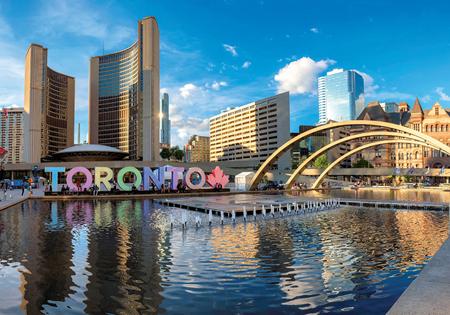
Second, we must remember humanity is part of the “things that have been made” that declare God’s eternal power and divine nature (Rom 1:20)←⤒🔗
God created creation, all of it, and Adam and Eve were the crowning achievement of his creation. God declared his glory in creation as he saw what he had made and declared it good. The only part of creation that was not good was a man alone (Gen 1:18). So, God created the woman, Eve, and in her creation God’s glory was magnified. “God saw everything he had made, and behold, it was very good” (Gen 1:31, ESV). God tells us, “God’s invisible attributes ... have been clearly perceived ... in the things that have been made” (Rom 1:20, ESV). This includes humanity in her togetherness.
The glory of God is magnified not only in what is created but also how it works. A singing bird, an ever-changing fall landscape, the shifting constellations, and the rising and setting sun all function to the glory of God. So also, the work of humanity, in all their ability is a created gift of God. The fruit of their labour is a testimony to the power and divine nature of God. Just as the star-lit heavens declare the glory of God (Ps 19:1), so also created human beings working in community can declare his power and glory simply in the things they do.
Third, stolen glory is common in a godless city←⤒🔗
In nature, humanity hears a clear message, “God is glorious!” Although voiceless, nature faithfully communicates this message. It is in the sinner’s heart that this message is suppressed (Rom 1:20). The sinner foolishly redirects the glory elsewhere. Today they try to credit the gods of chance, random mutations, time, and fascinating catastrophes with the ability to the create. On the other hand, for believers enjoying nature, the message from nature isn’t suppressed, but embraced and echoed. In nature, we add our voice to the cosmic praise, as we echo the glory of creation and sing, “How Great Thou Art.”
This is different in the city. In a godless city, the messenger is faithless and tries to control and change the message of glory. Although humanity is created by God with amazing abilities to create, compose, and compete, they do not give glory to God for who they are and what they can do. Instead, they steal God’s glory by trying to keep it for themselves. As buildings are raised, performances are given, and art is displayed, instead of singing “How Great Thou Art,” the predominant message in a godless city is “How Great We Are.” This is stolen glory.
As believers, these faithless messengers can make the city confusing. On the one hand, the magnificence of the city is undeniable – even with faithless messengers, the true message still spills out. On the other hand, it is clear something is wrong. The stolen glory bothers us, and we rightly refuse to join in stealing the glory.
What do we do instead? This leads us to a final reflection.
Fourth, where glory is stolen, our task is not to diminish the wonder, but to be faithful messengers and restore credit where credit is due←⤒🔗
Up till now, we’ve primarily focused on the glory of the city. Yet, anyone who has visited a large city knows there is deep darkness as well. In Toronto, you don’t have to go far to find passed out drunks, suffering homeless, poverty, drug addictions,prostitution, greed, arrogance, hatred, and other forms of sin and misery. This truth is part of the city that we should not avoid in a tour of the city. It points to the depravity of humanity and a glory that will quickly fade. The darkness shows the need for the gospel message, calling all people to repentance and faith in Jesus Christ and join all nations in declaring the glory of the LORD in all that we do. As the church of Jesus Christ, that is our message.

However, as we expose the truth of human depravity and bring this glorious gospel, we should be careful not to belittle the things that are magnificent in the city. To do so would join in diminishing the glory of the creator. Many things human beings have done is incredible. He has made man “little lower than the heavenly beings and crowned him with glory and honor” (Ps 8:4-5, ESV). This magnificence produced by humanity is just one more reason to praise our Creator God. Even though they may not give glory to their creator; we can give glory where glory is due. Praise God for his glorious creation.
Add new comment