
Brightest Brightness Over Against Darkest Darkness
Brightest Brightness Over Against Darkest Darkness
And I saw the holy city, new Jerusalem, coming down out of heaven from God, prepared as a bride adorned for her husband.
Revelation 21:1-4
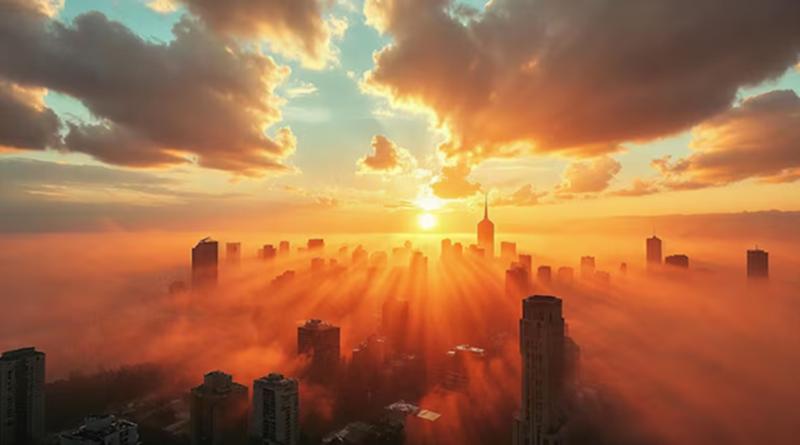
The apostle John sees glorious and unimaginable things regarding the everlasting church of God. He sees a new heaven and earth, and the new Jerusalem coming down from heaven. The city has “the glory of God, its radiance like a most rare jewel, like a jasper, clear as crystal” (21:11). John is putting in human terms the heavenly things he sees! We attempt to get a sense of that glory. We are allowed to think about it – it is described here in the Bible.
John sees the holy city, the renewed, redeemed, perfected, glorified church of the Lord Jesus Christ. Already in the Old Testament the church was represented by the symbolism of a city (e.g., Ps 48, 122). A city calls to mind concepts of permanent residence, great numbers of inhabitants, safety, security, protection, fellowship, and beauty. The opposite is living in a tent, a symbol of temporariness and vulnerability. Through the apostle God gives us a glimpse of the lasting and eternal glory of the Holy City Jerusalem and the holy nation it represents.
The glory is so magnificent because of the contrasting setting and context. This most glorious vision follows some of the most horrible images John has seen in previous visions. It is brightest brightness over against darkest darkness. Day versus night. Life versus death. In the final judgment, before this glorious city appears, God will cast all the wicked into the “lake of fire that burns with sulfur” (19:20b). An even darker vision is the actual binding of Satan himself, the ancient serpent, the devil, who was “thrown into the lake of fire and sulfur where beast and the false prophet were, and they will be tormented day and night forever and ever” (20:10). Further, there is the death of Death itself, which also is thrown into the lake of fire (20:14,15). How horrible for John to see the devil, death, and the judgement of the wicked in full display! Clearly, the context provides for a great contrast, in which the new Jerusalem is revealed in all her radiant glory, where only righteousness dwells! A city with twelve gates, which are twelve pearls, “Each of the gates made of a single pearl, and the street of the city was pure gold, like transparent glass” (21:21). What a contrast!
The glory of the New Jerusalem is also magnificent in relation to our human experience. The church as we know it today is not what John sees coming down from heaven! John sees a holy city, with all the purity of a bride adorned for her husband. He sees a separation from sin (and its consequences) and total consecration to God. But what John knew in his time, and what we know today, is a church consisting of people who sin and who experience different measures of pain, suffering, hurt, disease, and seemingly every form of brokenness – as expressed in verse 4, a life consisting of tears, death, mourning, crying, and pain. That is not merely a description of the nightly newscast, but a true documentary of our personal and corporate experience! When the loud voice proclaims that the former things have passed away, those former things are the present things and our experiences of this life. In John’s vision, in the New Jerusalem, the Holy City, all these things no longer exist. They have gone away! They are no more! Passed away! What a contrast!
John sees the future and glorious church of Jesus Christ! The promise of this vision gives unspeakable hope. All that we know currently, all that stands opposed to and contrasts with God’s glory, will pass away, and the world, the nations, and all believers will be renewed!
For Further Study⤒🔗
- Can you imagine what the New Jerusalem will look like based on the description given in Revelation 21?
- How will life as we know it today be different from how it will be then? What two significant elements stand in contrast to John’s vision?
- What is expressed in the wiping away of every tear from the eyes (4)?
Add new comment