
Don’t Waste Your Life
Don’t Waste Your Life

At the beginning of a new year many of us make resolutions and plans for what we are hoping to achieve this year. We may resolve to get our shed cleaned up and properly organised with all tools and fasteners stored in specific, allocated places. Or we might possibly make a resolution to become serious about losing weight by exercising more and eating more healthily. For those of us who are retired we may be planning for an overseas trip visiting family and friends. Young engaged couples may be eagerly planning for their wedding day. But for most of us the end of the holidays and the return-to-work routine very quickly becomes the order of the day and our resolutions are pushed onto the backburner whilst our plans are, albeit temporarily, buried under the pressures and demands of daily work.
In a student counselling course I attended some years ago the emphasis was on the counsellor encouraging and challenging high school students to dare to dream, to explore options and develop one’s talents and opportunities to the utmost. I certainly believe it is good to make plans for activities and events that we may look forward to and enjoy in the coming year. The Holy Spirit even gave this advice in Ecclesiastes 11:9 -
Rejoice O young man in your youth,
And let your heart cheer you in the day of your youth;
Walk in the ways of your heart,
And in the sight of your eyes;
But know that for all these
God will bring you into judgement.
Let there be absolutely no doubt in our minds that God has placed us on earth to enjoy His blessings, His love and care over our lives. The Westminster Shorter Catechism captures this thought very succinctly when it commences with the following question and answer:
Q. 1. What is the chief end of man?⤒🔗
A. Man’s chief end is to glorify God, and to enjoy him forever.
Throughout Scripture there are many passages that encourage and even exhort us to rejoice. Take Philippians 4:4 for example: “Rejoice in the Lord always. Again I will say, rejoice!”
Indeed, Scripture is crystal clear about the purpose of our life. God created us for His glory! And it is only when we acknowledge this and live this, that our life gains perspective, purpose and real joy. In Isaiah 43:6b-7 God states: “Bring My sons from afar, and My daughters from the ends of the earth. Everyone who is called by My Name, Whom I have created for my glory.”

Do we make our plans for this coming year within that context? Do we keep in mind the exhortation of Paul in 1 Corinthians 6:19, that “…you are not your own? For you were bought at a price; therefore glorify God in your body and in your spirit, which are God’s.” Our own Heidelberg Catechism brings out this same truth so eloquently and yet so simply in Lord’s Day 1 where it asks and answers:
Q: What is your only comfort in life and death?
A: That I am not my own, but belong with body and soul, both in life and in death, to my faithful Saviour Jesus Christ.
He has fully paid for all my sins with His precious blood, and set me free from all the power of the devil.
He also preserves me in such a way that without the will of my Heavenly Father not a hair can fall from my head; indeed, all things must work together for my salvation.
Therefore by His Holy Spirit He also assures me of eternal life and makes me heartily willing and ready from now on to live for Him.
This Lord’s Day is so immeasurably rich and comforting and instructive! Sometimes I feel that we who have grown up with these riches and have learnt them off by heart so that we eventually could make our public profession of faith, quickly become so familiar with these words penned down some four and a half centuries ago, that they no longer leave us deeply moved by the wonders of God’s grace so clearly evident in these statements. We need to be continually reminded of the deep and rich significance of these words and allow them to penetrate deeply into our hearts again and again, so that they are not just a wonderful theoretical confession but that we also live these words in our daily lives. We belong to Christ, not to ourselves! That implies that we do not have a license to do as we please, but that we do everything to please Him to Whom we belong! Heartily willing and ready to – in the words of John Calvin – “offer up our hearts, promptly and sincerely.”
Life is wasted when we do not live for the glory of God. And I mean all of life. The Bible very specifically includes such details of life as eating and drinking: “Whether you eat or drink or whatever you do, do all to the glory of God.” (1 Corinthians 10:31 - Bold letters mine, GW)
Let me pause for a moment here to clarify what we have been considering. So that means that it is our purpose in life, 24/7/52, to glorify God in our thoughts and words and deeds, and that only in this way will we enjoy God and so also enjoy life. And this implies that every thought and word and deed that does not glorify God is a waste of the life God has given us. How are we going to achieve that purpose God has placed in our lives? That is what I hope to address in this articles.

The stimulus for writing these articles came from a book of the same title by the well-known author John Piper (Crossway, 2003). The blurb on the back of this book caught my attention with its highlighted "don’t waste your life".
John Piper writes, “I will tell you what a tragedy is. I will show you how to waste your life. Consider this story from the February 1998 Reader’s Digest: A couple ‘took early retirement from their jobs in the Northeast five years ago when he was 59 and she was 51. Now they live in Punta Gorda, Florida, where they cruise on their 30-foot trawler, play softball and collect shells…’ Picture them before Christ at the great day of judgement: ‘Look Lord. See my shells.’ That is a tragedy.
God created us to live with a single passion: to joyfully display His supreme excellence in all the spheres of life. The wasted life is the life without this passion. God calls us to pray and think and dream and plan and work – not to be made much of, but to make much of Him in every part of our lives."
Most people slip by in life without a passion for God, spending their lives on trivial diversions, living for comfort and pleasure, and perhaps trying to avoid sin. This book will warn you not to get caught up in a life that counts for nothing. It will challenge you to live and die boasting in the cross of Christ and making the glory of God your singular passion. If you believe that to live is Christ and to die is gain, read this book, learn to live for Christ, and don’t waste your life!
And so I read this little booklet and was given renewed insights and understanding into how I could waste my life and how I could avoid a wasted life. Piper places much emphasis on explaining that we are created for joy. He writes, (p9) “It was not always plain to me that pursuing God’s glory would be virtually the same as pursuing my joy. Now I see that millions of people waste their lives because they think these paths are two and not one.”
I thoroughly enjoyed this booklet and also appreciated the challenges it put to me. My wife and I read a few pages together before we went to sleep each night, and it often provided food for further discussion and application to our own lives. And yet, I was left feeling vaguely dissatisfied. I felt that there was more that Piper could say whilst exploring the riches of our relationship with God and I guess it was the fact that Piper is a Baptist that I started thinking that the Baptist theological framework might provide me with the answer to my slight dissatisfaction, whilst at the same time provide a challenge to explore the same topic from within the Reformed theological framework.
It was at this point that a family member who takes delight in regularly challenging my thinking and forcing me to study and re-evaluate my stand on various topics – presented me with an old Dutch book which in its time was very popular and widely read and quoted. It was written by Rev. D van Dijk and was titled, “Gij zijt God’s medearbeiders,” (Oosterbaan and Le Cointre, 1958), which can be translated as: “You are God’s Co-Workers”. Skimming through this reminded me again that the Reformed position on living every aspect of our lives 24/7/52 to the glory of God is in no way inferior to that brought forward by Piper in his booklet, but adds another dimension to it that provides a depth and richness to our relationship with God that I miss somewhat in Piper’s booklet. So this will be my challenge in the next few articles: tapping into the booklet by Piper to provide insights into how we can waste our lives and how we can avoid wasting our lives – using the fresh and modern approach and examples Piper uses to bring this home as powerfully as possible, but placing this within the riches of the context of the covenant relationship that God has established with us as explained by Rev. van Dijk.
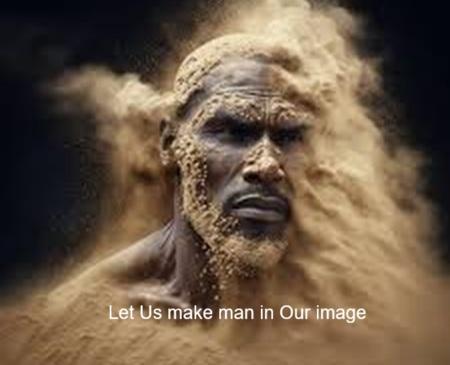
In an effort to set the context of our purpose and function as God’s people on earth, I believe it will be helpful to explore further and drill deeper into what Scripture reveals about what God had in mind when He placed Adam and Eve on the newly created earth. Genesis 1:26-28 gives us insight into this where we read:
26 Then God said, “Let Us make man in Our image, according to Our likeness; let them have dominion over the fish of the sea, over the birds of the air, and over the cattle, over all the earth and over every living thing that creeps on the earth.”
27 So God created man in His own image; in the image of God He created him; male and female He created them.
28 Then God blessed them, and God said to them, “Be fruitful and multiply; fill the earth and subdue it; have dominion over the fish of the sea, over the birds of the air, and over every living thing that moves on the earth.”
These verses contain such a wealth of information and instruction about such topics as the significance of “Us” and of “in the image of God He created him; male and female He created them”, that it is tempting to elaborate further on these verses. However, the focus for this paper is on what God reveals to us here about man being created in God’s image and the task or the “cultural mandate” God then proceeded to give to Adam and Eve and thus to all mankind. Perhaps it is still fitting to add that God reflected on His whole creation and commented that “it was very good.”
Turning to our Heidelberg Catechism Q. and A. 6, we confess there this explanation of the meaning of being created in God’s image:
Q. Did God then create man so wicked and perverse?
A. No, on the contrary, God created man good and in His image, that is, in true righteousness and holiness, so that he might rightly know God his Creator, heartily love Him, and live with Him in eternal blessedness to praise and glorify Him.

To tease this out just a bit further, we now turn to Prof. J. van Bruggen’s “Annotations to the Heidelberg Catechism (Inheritance Publications, 1991, p33) where we read:
That man was God’s image (not image bearer) means that he resembled God. Similarly, children sometimes resemble their father and it is then sometimes said: those children are the image of their father. When God looked down on Adam, He saw him exercising righteous dominion over all creatures (Gen 1:28; Ps 8). Therein God saw His own image, just as a king sees his image reflected in a faithful viceroy who administers the king’s laws. Thus, man showed himself to be God’s image in all his conduct by faithfully fulfilling his office (i.e., duty) to which he was called as prophet, priest and king.
God had created man to this end in (i.e., endowed with) “true righteousness and holiness.” Man, therefore, stood in a true relationship to God, His law and His service (righteousness); and he dedicated himself fully to the LORD in complete purity. Man did not have any wrong impulse; he desired solely to devote himself to God (holiness).
… For the catechism says that God gave him His gifts, “so that he might rightly know God his Creator (i.e., he had to use the gift of knowledge properly as prophet), heartily love Him (i.e., he had to preserve his holiness as priest), and live with Him in eternal blessedness (i.e., he had to exercise his righteousness as king).” Adam, therefore, fulfilled the three-fold office.
Whilst the fall in sin made it humanly impossible for man to fulfil this office any longer, this did not negate the mandate God gave to Adam. It did mean that we all stood condemned to death before God as cursed rebels. Thanks be to God alone that He did not leave us in this depraved state but sought Adam and Eve (us) out in the Garden of Eden and gave us the promise of a Redeemer. It is significant that in Genesis 9:1 God repeated this mandate to Noah. And in Christ, that three-fold office has been restored again; we are called Christians because “I am a member of Christ by faith and thus share in His anointing” (HC Q. and A. 32). And so that beautiful and rich mandate He gave to us in paradise continues: “Be fruitful and multiply; fill the earth and subdue it; have dominion over the fish of the sea, over the birds of the air, and over every living thing that moves on the earth.” And in all this we are to reflect the “image” of God and fulfil this mandate as co-workers of God!
And so we come to the context of the covenant relationship that God has established with us and in which we may live our everyday life – 24/7/52. And in case you have not yet caught on what I mean with 24/7/52, it simply means: 24 hours a day, 7 days a week, and 52 weeks a year. Why add the 52 you may ask? In one of my later articles I DV intend to explore further that there are no holidays from the service of God; no 2 or 4 weeks break every year or longer during which we can just do our own thing and relax from the need to place Him first and foremost in our lives and live solely and completely to His honour and glory! But I digress.
The word covenant first appears in the Bible in Genesis 9:8 where God spoke to Noah and his sons: “And as for Me, behold, I will establish My covenant with you and with your descendants after you…” However, I believe we can readily conclude that the covenant was well and truly established as a relationship “contract” by God with man when He spoke those words introducing mankind’s mandate. Inherent within that mandate was a covenant outlining mankind’s purpose and task, as co-workers of God, to be fruitful and multiply and fill the earth and subdue or develop it to His honour and glory.

In the introduction to his book, “The Covenant of Love: Exploring our Relationship with God” (Premier Publishing, 2003, p7), Rev. K Stam writes:
One cannot capture the riches of the Bible in a single word. But if there is one word that merits consideration as a key concept in the Holy Scriptures, it is the word covenant. With this term I refer to the whole revelation of the covenant which God in His love establishes and maintains with His children. Throughout Scripture the theme of God’s covenant faithfulness keeps recurring as a dominant theme. Where would we be today if God in His grace had not made a covenant with us, one that is now through Christ called the new covenant in His blood?
God reveals Himself from beginning to end in the Bible as the God of the covenant. It is by way of a covenant that he comes to us and enters into a relationship with us. It is within the framework of this covenant that he deals with us. The material and spiritual blessings that come our way are received by virtue of the covenant. This is true in both the Old and the New Testament.
Unfortunately, there are many today who do not know of the centrality of the covenant. And some, who do know, have come to question or reject its relevance.
In the foregoing we’ve explored several aspects of the purpose and focus of our lives on earth as children of God, aspects such as our creation mandate, being created in the image of God and living within a covenant relationship with God. Hopefully I have demonstrated the interconnectedness of these three. Allow me however, to explore the creation or cultural mandate just a bit further before looking at some relevant examples of daily living to challenge us whether we are indeed striving to live as God intends us to live to His honour and glory, or whether we are wasting our time and possibly our lives with trivial diversions, living for comfort and pleasure.
The word “culture” comes from a Latin word that means: build, tend, and care for. God gave us the mandate to populate the earth and to fill it and develop it – implying to build, to tend and to care for and develop the resources within His creation. That implies that God’s plan for this earth was not yet completed. God wished to bring it to completion together with mankind – with man as His co-worker! He gave man many talents to fulfil this task that would reflect God’s image as he set about on his three-fold office on earth; talents that would enable the earth to be developed through man’s exertions in agriculture, production and mineralogy, building and construction, scientific discoveries, medicine, design and technology, art and music and so much more! God has put us to work using our God-given talents in discovering and developing these riches that He has placed in this earth to His glory. That is our cultural mandate! That must determine the context of our studying and working, but also of our leisure time and our retirement. Thus to not develop and use our talents and our time to the best of our ability to the honour of God implies, I believe, a serious waste of our lives!
I recently came across the following description of our cultural mandate by Prof. K. Schilder from his book: “Christus en Cultuur”. Freely translated from Dutch it reads:
Culture is the striving of all mankind to discover all the present powers in creation, to develop them and place them in the service of others nearby and far off. This needs to occur in obedience to what the LORD has commanded us about that in His Word. Everything that in this way has been obtained from creation is to be used for the service of man, who works in the kingdom of God. And the final purpose is that man will place the fruit of his development work (ontginningsarbeid) at the feet of God, so that God will be all in all and that all work will praise his Master.
Quoted in De Bazuin nr 17-26 August 2015 p261
It is telling that Schilder places priority emphasis on the service of others. God has not placed us here on earth to serve ourselves and further our own interests in the first place, but to serve each other – to His glory and honour! There are many Scripture texts that emphasise the call to serve, rather than be served, and to use out talents for the benefit and well-being of each other, rather than laying up goods for ourselves. For example, on reading Schilder’s description, my thoughts went to what our Lord taught us in Matthew 25:31-46 concerning the judgement day of the Son of Man. On that day He will separate the nations into sheep on His right – those who obediently followed where He led them, and goats on His left – those who stubbornly went their own ways.
We read in verse 34: “Then the King will say to those on His right hand, ‘Come, you blessed of my Father, inherit the kingdom prepared for you from the foundation of the world. For I was hungry and you gave Me food; I was thirsty and you gave Me drink; I was a stranger and you took Me in; I was naked and you clothed Me; I was sick and you visited Me; I was in prison and you came to Me’.” And when the righteous ask in surprise when this happened, Christ answers them: “Assuredly I say to you, inasmuch as you did it to one of the least of these my brethren, you did it to me.”
Before we jump to the conclusion that Jesus is teaching us that when we serve the hungry, thirsty, strangers, naked or prisoners, we are automatically doing this to Jesus, we need to engage with these verses a bit more deeply. In his Welwyn series commentary on Matthew, John Legg comments: “If that were true, then Jesus would be teaching that everyone who engages in good works, supports charities and does his bit for the needy of the world is ‘righteous’ and will inherit eternal life … Christ’s brothers are not all men, nor just Jews, but Christians, disciples. He has referred to them already in this Gospel in 12:48-50 and will do so again (28:10) … The New Testament lays especial stress on love of our brothers, Christian brothers… Love, like charity, begins at home, in the family of believers. This is evidence of our redeemed status as the children of God. It is implied that we are doing this because we are our Lord’s brothers. This shows our allegiance to him and our love for him and, therefore, our position as his true disciples. More general works do not have this motivation and so do not provide this evidence. We should note that Jesus refers to ‘the least of these brothers of mine’. They may be unattractive, humble or unimportant, but they are Christ’s… Our motivation must not be what we get out of it, but simple devotion to our Saviour.” (2004, p471-2)

Back to our topic, this element of serving others also comes out clearly in the writings of both John Piper and Rev. van Dijk about the purpose of our life on earth. Piper’s emphasis is unreservedly on reaching out to others with the Gospel. He writes, “By gladly pursuing the gladness of others in God – even at the cost of our lives – we love them and honour God. That is the opposite of a wasted life. (p103)
Within the context of his book “You are Gods’ co-workers”, Rev. van Dijk places his emphasis on our responsibilities within society as covenant children of God. He states: “You perform your work, in obedience to the Godly charge, as member of the Church, as member of the society, and as citizens of the state.” (p99). He goes on to warn members of God’s people who appear to have little understanding of this calling and are content to leave the work in God’s Kingdom up to others. He writes: “As if this labouring at the development and welfare of Church, State and Society was just a personal hobby-horse which you may pursue if that is where your interest lies, but from which you may also freely withdraw yourself in good conscience. And so they just let others labour, but keep themselves at a distance.” (p100)
He laments that such men are often critical about matters in Church, society and state that displease them, but they go no further than that. Every evening they are engrossed in some magazine or TV programme that quite possibly brings all sorts of interesting things to their attention, but seldom in something that engages their thoughts and understandings in a positive direction. And although they often use the excuse that their family needs them at home in the evenings, it is also often true that when their children seek their attention for guidance and direction and support, they respond with something like: “Keep quiet please, let me just watch this programme.” That’s wasting our life! Fathers, please realise your responsibilities, first of all to the purpose God has placed you on this earth to develop your talents to His honour, but also to the children God has placed in your care and the promises you made at their baptism!
But let’s commence our assessment of the choices we make at the beginning of our careers. Having completed a series of professional development sessions on career counselling, I’ve received much experience in guiding adolescents in making career choices based on their abilities and interests and connecting that to careers that meet their criteria, have a shortage of skilled applicants and are likely to remain in demand in the foreseeable future. Students often seek further information on beginning expected salaries, but seldom on whether a possible career enables them to use their talents to the honour of their Creator and for the benefit of others. And I guess that’s only to be expected, as they also need to have their thoughts on these matters shaped and moulded to think in such a direction – something that seldom happens in a government public school – but hopefully does occur in our John Calvin School system.

I can relate to Rev. van Dijk’s observation that more often than not a career choice just sort of “happens”. And sure, in hindsight we confess that God leads all things including our choice of employment. Often the son follows his father in e.g. the building trade where he is able to make good money or Dad is able to set him up in a lucrative business that has excellent prospects. In itself there is certainly nothing wrong with any of this, provided it is done with the right motives. Rev. van Dijk makes the point that the correct criterion for a parent to consider with the choice of a career is the consideration, “How can I, how can my child, be most effective and productive as God’s co-worker?”
He then goes on to acknowledge, “I know that by speaking in such a manner I am so far removed from what is considered to be practical that many will claim: ‘That is foolishness, that is something you will never attain. By far the majority of people have no other purpose in their career than earning their daily living; making lots of money; if possible, becoming rich; obtaining a good position; being honoured and respected’.” (p14)
But unfortunately, if we also think in this way then we are fostering a dualism in our lives which will have as consequence that we will lead a double life. In one part of our life, that is in the Church building on Sundays and in the Bible study Society meeting room and in our “inner chamber”, and if we are called to the office in Consistory meetings and home visits, we will serve the Lord, but in the other part of our life we are no different from the world and their striving for selfish ideals, and ultimately we serve only ourselves. Rev. van Dijk points out that the first mentioned part of our lives should serve to give us the wisdom and strength to enable us to be faithful in our daily work and career in full accord with what the LORD requires of us.
Time and again we hear from the pulpit that all of life is one, and that we must love the LORD with all our heart and with all our soul, with all our mind and with all our strength. It is then only logical that we must also choose our vocation with the question: “In which career will I be able to work most fruitfully in fulfilling the task which God placed on the shoulders of mankind in Paradise?”
It then becomes very obvious that there are many vocations that can never be ours by choice; we can never be engaged in work that infringes on God’s commandments such as selling lottery tickets or working on Sundays in employment other than essential services, or where our employment requires us to be members of antichristian organisations such as trade unions. But apart from such exceptions, every honest vocation that has been considered with the above criterion in mind, can form very much a part of that cultural mandate given to us in Paradise.

Rev. van Dijk makes the point in his book (p17) that you don’t necessarily have to be a professor or a teacher or a minister or a nurse to take part in fulfilling one’s cultural mandate – this applies just as much to a carpenter, a salesman, a shopkeeper and a sanitary worker from the local council. They all have a task that has significance and a place that cannot be missed in the context of the overall needs of society. This can be demonstrated quite simply when for example workers who many of us may look down on with some disdain such as the council sanitary workers would withdraw their labour for a period of time. We are then suddenly confronted with the realisation that also these workers perform a vitally important function for the well-being of society. The attitude of the worker and the manner in which he does his work will determine whether it is also done to the honour of God.
According to Rev. van Dijk again (p18), there are three personal considerations that affect our choice of a career: our inclination, or where our interests lie; our aptitude or skills and abilities; and the circumstances wherein we exist. So from that perspective there isn’t really any difference between his advice and the career advice and counselling given to adolescents in Years 11 and 12 today. Nevertheless this advice was not quite as self-evident in the 1950s as it may be today. It should be a reason for much thankfulness that the choices and opportunities of today’s young people are in many ways so much greater than it was for young people seeking employment in the 1950s. Having the option and the means of studying at a university and gaining a degree was then far more limited than what it is today. There were many young people whose wage packet was needed by the family as soon as they were old enough to work! Their choice of vocation was determined very much by the circumstances wherein they existed, despite their inclinations and aptitude. But as Free Reformed Church people in Australia, we were nevertheless richly blessed by our Heavenly Father – and that also had a lot to do with our attitude and the manner in which we did our work! “Those Dutchies” very quickly developed a reputation for being hard workers and much sought after by employers for these skills. And thankfully even today many secular employers are keen to employ students from the John Calvin Schools for their honesty, commitment and work ethic.
However, we need to be ever vigilant that this “Calvinistic work ethic” doesn’t become a means to an end in that it serves purely for the acquisition of earthly treasures and pleasures – for a mansion on a large block with a boat and a four wheel drive and a caravan enabling us to “escape” on extended holidays. When our work becomes something that we need to endure to finally get to the weekend when we can relax and enjoy ourselves – then perhaps we need to reassess our priorities and thinking. When we wish each other, “Have a good weekend”, but seldom think to wish each other, “Have a good day at work”, then again, perhaps we need to reassess our thinking on this score. It’s so easy for us too, to fall into the trap of looking upon our daily work as a necessary evil, something to be endured rather than something to be seen as the purpose and fulfilment of our cultural mandate as co-workers of our Heavenly Father in developing the resources He has placed in creation to His glory and the benefit of our neighbour and society. And while it is certainly much reason for thankfulness that we may enjoy our “weekends” and our holidays to relax and enjoy the beauty of God’s creation and our family time, this ought never to be a purpose in itself; it must never be placed next to or even opposed to our daily labour. To labour with the talents God has given us and so to serve our Heavenly Father, this gives our relaxation and rest its proper purpose and value when it is used to better equip us for a re-energised and revitalised focus on our daily work.

I think I can be confident in assuming that the vocation of a housewife does not need to be stressed among us as another vitally important role within society. Nevertheless it may be helpful to mention here that our girls too should develop their talents to the best of their ability in whatever academic or vocational area their interests and abilities lie. Even when the circumstances wherein they exist lead to marriage and a family with children – and this certainly cannot be taken for granted, then the knowledge, skills and abilities they have acquired will surely also be of great benefit to the extremely responsible and onerous task of raising their children and caring for their family at home.
Rev. van Dijk (p29) points out however, that a woman should never consciously choose a career that will enable her to achieve a feminist model of independence, but that in her choice of vocation there should always be the willingness to give up the career she has chosen if the LORD opens the way to the married state. But no less than that of a man, her career choice should primarily be determined by the question: “How can I do the most for the LORD and His service?” and not, “What is for me most enjoyable?” Might I dare to suggest then that a traineeship as a beautician should not feature on a possible list of career choices that meets this criteria, even if it might be something our daughters would enjoy? There is no room for such a mentality in our Covenant relationship with God.
I mentioned previously that how we do our work, our attitude and the manner in which we do our work will distinguish us from our unbelieving colleagues who quite often do as good a job as we do. The classic statement of the ethics of the kingdom of God can be found in Christ’s Sermon on the Mount in Matthew 5. Here Christ explains so clearly that God’s commandments address both inward motives as well as outward conduct. And then in the verses 13 to 16 Christ gives an unequivocal charge to believers regarding their conduct in this world. He teaches us, His people, that:
13 You are the salt of the earth; but if the salt loses its flavour, how shall it be seasoned? It is good for nothing but to be thrown out and trampled underfoot by men.
14 You are the light of the world. A city that is set on a hill cannot be hidden.
15 Nor do they light a lamp and put in under a basket, but on a lampstand, and it gives light to all who are in the house.
16 Let your light so shine before men, that they may see your good works and glorify your Father in Heaven.

In his lengthy but invaluable “Studies in the Sermon on the Mount” (Eerdmans, 1974), D. Martyn Lloyd-Jones makes what I believe a valid claim that these words of Christ apply in the first place to the individual Christian, and not to the Christian church as such. He writes:
There are those who say that the Christian should act as salt in the earth by means of the Church’s making pronouncements about the general situation of the world, about political, economic and international affairs and other such subjects. Undoubtedly in many churches, if not in the vast majority, that is how this text would be interpreted…
Now as I see it, that is a most serious misunderstanding of scriptural teaching. I would challenge anyone to show me such teachings in the New Testament … I suggest to you, therefore, that the Christian is to function as the salt of the earth in a much more individual sense. He does so by his individual life and character, by just being the man that he is in every sphere in which he finds himself. For instance, a number of people may be talking together in an unworthy manner. Suddenly a Christian enters into the company, and immediately his presence has an effect. He does not say a word, but people begin to modify their language. He is already acting as salt; he is already controlling the tendency to putrefaction and pollution. Just by being a Christian man, because of his life and character and general deportment, he is already controlling that evil that was manifesting itself, and he does so in every sphere and in every situation. He can do this, not only in a private capacity in his home, his workshop or his office, or wherever he may happen to be, but also as a citizen in the country in which he lives … Think of great men, like the Earl of Shaftesbury and others, who, as private Christians and as citizens, worked so hard in connection with the Factory Acts. Think also of William Wilberforce and all that he did with regard to the abolition of slavery. As Christians we are citizens of a country, and it is our business to play our part as citizens, and thereby act as salt indirectly in innumerable respects. (p154-155)
For those of us who are familiar with our Dutch history I could also mention men such as Groen van Prinsterer who, as the father of the Anti-Revolutionary Party, wrote and spoke and worked so hard to hold back the forces of revolution and anarchy unleashed by the French Revolution ideals of liberty, fraternity and equality in the Netherlands in the 1800s, and also of Maurits van Hal who worked tirelessly to gain the right of existence and equality of funding for Christian schools. These men used their God-given talents to the honour of God and the benefit of their neighbours as a salting salt in an increasingly salt less society. And they did this with the fervent and prayerful support of “ordinary” individuals like you and me.
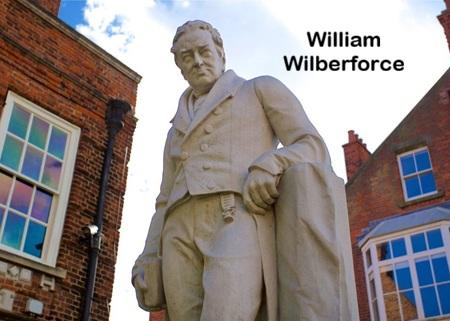
That is another way in which we can make a not insignificant contribution to our cultural mandate. There are similar if not greater evils than exploitation of the workers or slavery, evils such as legalised abortion, homosexual “rights” and the breakdown of the marriage that also have their root in that perverse and satanic lie given voice by the French Revolution that threaten the very foundations of our society. Do we recognise and meet this challenge, or do we “leave it up to the experts” and relax in front of our mind-numbing TV screens?
Christ’s Sermon on the Mount as retold by Matthew in chapter 5 provides such a wealth of instruction in how we are to view our lives in the light of Scripture that it is worth exploring this further. In the so-called Beatitudes listed in the verses 3-12, our Saviour delineates the Christian character as those who are poor in spirit, those who mourn, those who are meek etc. But then in the verses 13-16 He challenges us to consider how we must manifest this, or, in the words of Dr Martyn Lloyd Jones (p149), “having realised what we are, we must now go on to consider what we must be.” A closer analysis of these words will help us understand how we are to constructively use our lives as co-workers in God’s Kingdom.
So first of all, what exactly is our calling, our mandate in the light of the Sermon on the Mount? Let’s examine how Christ’s words in Matthew 5:13-16 sheds light on this question. When He is saying that we Christians are salt and light, he is not only saying something about us – He is also saying something about the condition of the world in which we live. First in regards, to salt, Jesus is probably implying two or three things, and possibly all three. Salt was used in Bible times to flavour and season food, making it more palatable and appetising; which is to say that to God, the world is tasteless, it is bland, it is unappetising, wholly and entirely without flavour. This analogy makes sense, because people who do not believe in God, live their lives without giving God any pleasure or delight. Their lives fail to give God glory or honour or praise. Their lives are anything but palatable or pleasing to God. But salt also has a second major purpose. Salt was used as a preservative for meat, to prevent it from rotting and decaying. We’re not so familiar with this attribute of salt since we have freezers to keep our meat fresh. But in Jesus’ days, when fish was caught or meat freshly butchered, they would always pack that meat in salt to keep it fresh. Drawing this analogy through to the world, Jesus is implying here that the world is dead in sin, subject to decay, corruption, to rotting and spoiling. So either way, whether Jesus is emphasising the use of salt as a flavouring influence or as a preservative, the basic idea is the same – without the presence of salt, the world is an awful place to be.
And finally, salt also has the characteristic to make one thirsty. With reference to the Beatitudes, we are told that “blessed are those who hunger and thirst for righteousness”. The effect that we are to have on our neighbour is that we are to provoke them too to hunger and thirst for God and for righteousness.
Jesus also mentions that Gods’ people are the light of the world. The purpose of light is straight forward. Light enables us to see in an otherwise dark place. In Jesus’ days this would have meant lighting a flaming torch or a candle to make light in a dark place. For us it is merely the flick of a switch and instantly there is light in the room so that we can see. Jesus was implying that the world around us is immersed in darkness. The people stumble about blindly in the darkness, hopelessly lost and without any real direction in their lives.
Can we agree with that analogy, that the world around is tasteless, flavourless and hopelessly dark? Sociologists would have us believe that we’re still ascending the evolutionary scale, ever evolving into a more improved, autonomous being. And people are quick to point out that even amongst those who are not practicing Christians, there are millions who still do good in this world, who make personal sacrifices for others, who dedicate their lives to spreading love and kindness and goodwill in their neighbourhood, trying hard to make their corner of the world a little brighter, a little “saltier”. How do we respond to that? Do we really believe that the world around us with all its excitement and glitter and attractions is in reality tasteless, flavourless, subject to corruption and rottenness, hopelessly lost in an oppressive and overwhelming darkness?

As believers we can respond with what God’s Word teaches us about that pervasive power, the lethal influence of sin in people’s lives. Consider what Jesus Himself says in John 3:19-20. “This is the verdict, Light has come into the world, but men loved darkness instead of light because their deeds were evil. Everyone who does evil, hates the light and will not come into the light for fear that his deeds will be exposed”. Consider also what Scripture says in Romans 1:21, “...that, although sinful man knows God, he refuses to glorify Him as God or give thanks to Him. Instead, his thinking is futile and his foolish heart is darkened”. See also Romans 3 where Scripture chronicles the effects of sin on the whole being.
This is the commentary which Jesus provides about the world in which He lived and we still live today. In the Sermon on the Mount Jesus was not saying this in a pessimistic way, or to be condescending or judgemental – He was saying this to instruct His people and with the best interests of the world at heart. For was He not Himself the “Light of the world”, Who came into the world so that those who were living in darkness could see the great Light? And so when we consider the sad and lost state of this world, we must not do so with scorn or with derision, or disdain for its people, with a sort of a “the devil may take them” attitude. Jesus didn’t think that way and He doesn’t want us to either.
The people who live in unbelief are sinners just like us, in desperate need of grace. They are sinners walking in darkness who need the light of Christ to shine on them, to illumine their foolish hearts and darkened minds. They are sinners who need the purifying salt of Christ’s righteousness to arrest the corruption and decay within them, to purify their hearts so that their words, thoughts and actions are palatable and pleasing to God – just as we need that!
We, who are so rich in God’s covenant, really need to do better on this score, because it’s so very easy for us to turn our backs on this world. When we hear of the terrorism, the shooting, maiming, killing, stealing, raping and the molesting that goes on in the world around us, we often want to stop caring and pray that the LORD would come quickly and destroy this evil and corrupt world. But that’s not what Christ prayed for in His High-priestly prayer. He prayed, (John 17:15-18) “My prayer is not that You take them out of this world, but that You protect them from the evil one. They are not of the world, even as I am not of it. Sanctify them by the truth, Your Word is truth. As You sent me into the world, so I have sent them into the world.” Jesus has sent His Church into the world for a purpose, and as long as He tarries, so long as it is day, that purpose remains, that calling persists. And that brings us to how we are to exercise this calling.
Let’s have a look at the context of the verses 13-16; they come right on the heels of the Beatitudes, and this supplies us with a very valuable perspective. The virtues, the disciplines of the Christian life – like humility and meekness and mercy and making peace – they are not only meant to be exercised here in the fellowship of the Communion of saints, but are designed to be put into practice out there – amidst unbelievers in the world. So when Jesus speaks about His Church, His own people, living as the salt of the earth and the light of the world, He’s not bringing a new message, He’s referring to the Beatitudes where He has already provided them and us with all we need to know to be a powerful influence on this world. The word “Beatitudes” can also be explained as the way to happiness or to blessedness.

By showing meekness, we communicate to the world that we Christians are not proud; we are not puffed up with holier-than-thou attitudes. Rather, we are gentle and mild, patient and trusting. We are willing to sacrifice for others, we are willing to serve in whatever way we can, we remain calm when inconvenienced and treated unfairly. We resist e.g. feelings of road rage, even if someone cuts us off unfairly at the roundabout. Seeing such an attitude displayed has a powerful preserving and brightening influence on a corrupt and dark world.
Likewise, when we truly hunger and thirst after righteousness, and when we are merciful, and pure of heart, we show by our righteous deeds, we show by our sanctified living, by our pure speech, by our kind deeds of love and mercy, that we love the Lord, and that our faith is real – that we serve the One Only True God, and that He holds the central place in our hearts and in our homes. Seeing such an attitude displayed has a powerful preserving and brightening influence on a corrupt and dark world.
And when we live as peacemakers in this tumultuous world, when we willingly and gladly suffer the mockery of fools, when we turn the other cheek to one who wrongs us, when we refuse to let anger and hatred and malice and envy well up within us, when we answer criticism with a gentle response, when we endure persecution with rejoicing and gladness, this too has a powerful preserving and brightening influence on a corrupt and dark world.
The beatitudes are indeed essential guidelines to blessedness, to true happiness and fulfilment, but they are so very far removed from what the world sees as guidelines to happiness and fulfilment. Their beatitudes would probably read something like this:
Blessed are the rich, for they can have everything they want; blessed are the powerful, for they can control others; blessed are the sexually liberated, for they can fully satisfy their desires; blessed are the pop stars, for they are envied. Isn’t that the world’s way, the way of life to which also Christians are naturally inclined, rather than the way of sacrifice?
But does the world’s “me first” philosophy really bring happiness? You do not have to be a Rhodes’ scholar to see through the façade. It is an empty promise leaving in its wake broken marriages, derailed children, drug dependency, misery and despair. In Romans 1:25 Paul calls it a lie. But we are to be different, to live the promise and the antithesis God put into place in Genesis 3:15. Paul pleads with us, “Therefore I urge you brothers, in view of God’s mercy, to offer your bodies as living sacrifices, holy and pleasing to God - this is your spiritual act of worship. Do not conform any longer to the pattern of this world but be transformed by the renewing of your mind. Then you will be able to test what is the will of God – His good, pleasing and perfect will. (Romans 12:1-2)
In essence then, Jesus Christ has called us to live out only what He, by His Word and Spirit, has worked in us. When Jesus asks for His Church to be salt and light in this world, He is not asking us to do anything more than He has expected from the very beginning, that is: To be faithful and to walk before Him in obedience. To be unashamed and unafraid to live for Christ in a world that tramples on the Salt and that rejects the Light. For our Saviour also attached a serious warning of the consequences of not striving to be a salting salt in the latter part of verse 13: “But if the salt loses its flavour, how shall it be seasoned? It is good for nothing but to be thrown out and trampled underfoot by men.” That would be wasting our lives!

Now apply that imagery to a Christian living in this world. If we Christians lose our saltiness, if we allow ourselves to become defiled, weighed down by the cares of this world, bogged down by sin and evil, caught up in temptation, swallowed by lust and desire, then we have lost our power to influence. That would be wasting our lives!
When we don’t perform our work in conscious reliance on God’s enabling power and with the deliberate aim to please and honour Him and reflect His glory so that our lessons are well prepared, our ditches are dug straight, our pipe fittings do not leak, our cabinet corners are flush, our word processing accurate and appealing and our meals nutritious and attractive, then we lose the power to exert Godly influence on a world where such motivation is pointless and meaningless.
When a Christian boy and girl defile their courtship, when our young people (and not so young) flirt openly and immorally with others and are not pure and holy in their relationship with each other, then they lose their power of Godly influence in a corrupt world where adultery and infidelity run rampant.
When our men do not focus their thoughts on that which is pure and holy but allow their eyes to take them to immoral and indecent sites on the internet, then they not only sin against the seventh Commandment and do incalculable damage to their ability to have a pure relationship with their wives, but they also lose the power of Godly influence in a corrupt world where sexual immorality and pornography are fast becoming the norm.
When at work, or on the road, or on the sports oval, or at the grocery store, or on the phone – we engage with another person in an argument of unsanctified words, or in a show of uncontrolled anger and rage, then we lose our power of Godly influence in a world where lack of self-control and anger management are rapidly growing societal concerns.
As salt, we then not only lose our power to positively influence others in the world, but our behaviour and attitude is unpalatable and unpleasant to the LORD as well. We bring dishonour to the Name of Christ and His Church. And if we persist in such an attitude, Christ warns us that He will eventually spit us out of His mouth like the lukewarm church of Laodicea in Revelations 3.
Likewise, as God’s Covenant children, Christ’s light is within us and is meant to be seen by others – not only by means of our righteous deeds, but also by our words of witness. When we are put in the position of speaking an edifying word about Christ, or pointing the way to Christ, or to defend His Name from being profaned but fail to do so, we also are hiding the light under a bushel. If we are fearful or reluctant or too timid to do a good deed, to speak a good word in time of need, to reach out and support someone who is down and out and placed on our path with Christian comfort and encouragement and even practical support where possible as in the parable of the Good Samaritan, then we are not letting our light shine. Jesus said, “Let your light so shine before men that they may see your good works and glorify your Father in Heaven.”

In other words, by being salt and light, God is pleased to also use us to bring the lost into a saving relationship with Him. God is pleased to use us to make the light of Jesus Christ shine in men’s hearts and minds and souls, piercing their darkness and bringing them to repentance, chasing away their dark deeds of sin and evil. The purpose of this being that God receives all praise and glory.
And let’s face it: who, having been graciously healed from all their sins by the Lord, does not overflow with thankfulness? Only he who does not yet fully understand what this implies! What the heart is full of, overflows from the mouth. What is it then, that overflows from our mouths? Is our heart indeed full of humble thankfulness for what Christ has done for us? Then let that determine our words and deeds, our lifestyle and our attitude, so that all who are placed on our path may see this and hear this and glorify our Father in Heaven. Then indeed, we may proclaim a message of joy to the world. And will not God Himself, Who has given us this calling – will He not also provide us with all that we need to fulfil that calling?
And what about that antithesis? It’s a false dilemma if we state on the one hand that we must maintain the antithesis, the enmity between the seed of the serpent and ourselves as the seed of the woman, the Church; and on the other hand see this as a reason that prevents us from being a powerful influence for good in the world around us. That would equate to the Church believing that we need to raise up bulwarks all around us against the world in a desperate attempt to prevent ourselves from becoming influenced by the world. That’s not what Christ prayed for in His High Priestly prayer and that ultimately won’t work either since the biggest ally of Satan exists in our own sinful heart. We need to prepare and equip ourselves and our children to be able to fight that spiritual battle in the world. For it is by the very act of being totally different from the world in the way of the Beatitudes, that we maintain that antithesis – and in that way we are indeed a salting salt and a powerful light that dispels the darkness around us and reveals the evil and corruption of a world lost in the darkness of slavery to sin and Satan.
How then do we prepare and equip ourselves for this calling? Allow me to briefly refer here to the well-known Ephesians 6: 10-20, which deals with putting on the whole armour of God. It does so within the context of life being a battle, a wrestling against “principalities, against powers, against the rulers of the darkness of this age, against spiritual hosts of wickedness in the heavenly places.”(vs 12) One of the most important elements in the following verses is that of equipping ourselves with the sword of God’s Word. We should never underestimate the essential importance of daily immersing ourselves in God’s Word as our daily spiritual food and drink. Studying God’s Word together in the Bible study societies is an invaluable aid to support us in growing together in faith and knowledge of the applicability of God’s Word to our daily life. When we thus together and personally are able to grow in fully appreciating the riches and the power of this Word as a sword to ward off and defeat Satan’s temptations and so equip ourselves for the serious challenge of being a salting salt and a light set high on a standard, then we will certainly be engaged in a productive and valuable use of our time and our life here on earth.
But how many of us truly appreciate the fact that we are constantly engaged in a spiritual battle? Christians living in Moslem countries or in China have no doubt about that reality in their daily lives. But we who live in the so-called safe and free West? We need to remind ourselves that we are involved in exactly the same struggle as persecuted Christians are – Satan is merely using different weapons for us than he is for them. But it can be argued that the weapons of post-modernism and secularisation and the seductive and pervasive influence of modern technology and evolutionary science are far more effective weapons of mass destruction of Christians than the cruel physical persecution suffered by Christians in Moslem countries. Piper observes that: “In wartime, we ask different questions about what to do with our lives than we do in peacetime. We ask: What can I do to advance the cause? What can I do to bring the victory? What sacrifice can I bring or what risk can I take to ensure the joy of triumph? In peacetime we tend to ask, what can I do to be more comfortable? To have more fun? To avoid trouble, and, possibly, avoid sin?”

He then goes on to expose what he calls this ruinous ethic of mere avoidance which is so endemic in many modern Western Christians’ way of living. He points to the questions they ask themselves or others when warned about their slack lifestyle:
They ask, What’s wrong with it? What’s wrong with this movie? Or this music? Or this game? Or these companions? Or this way of relaxing? Or this investment? Or this restaurant? Or shopping at this store? What’s wrong with going to the cabin every weekend? Or having a cabin? This kind of question will rarely yield a lifestyle that commends Christ as all-satisfying and makes people glad in God. It simply results in a list of don’ts. It feeds the avoidance ethic.
The better questions to ask about possible behaviours are: How will this help me treasure Christ more? How will it help me show that I do treasure Christ? How will it help me know Christ or display Christ? The Bible says, “Whether you eat or drink, or whatever you do, do all to the glory of God” (1 Corinthians 10:31). So the question is mainly positive, not negative. How can I portray God as glorious in this action? (p119)
Piper then laments that clean noses and quality family time displayed by many Christians is not life! He writes: “Oh how many lives are wasted by people who believe that the Christian life means simply avoiding badness and providing for the family. So there is no adultery, no stealing, no killing, no embezzlement, no fraud – just lots of hard work during the day, and lots of TV and PG-13 videos in the evening (during quality family time), and lots of fun stuff on the weekend-woven around church (mostly).This is life for millions of people. Wasted life. We were created for more, far more.”
These words are thought provoking. When I personally look back at how I have spent my life over the past years and carefully analyse how focussed and self-disciplined I have been in using my time to the honour of God in His service, then I cringe in memory of some of the petty pursuits that have wasted so much of my time. I think many of you will be able to relate to some of my experiences. Did it really take me a whole hour (6.25% of my awake time!) to read the newspaper over a cup of coffee after work when my vegie garden was screaming to be weeded and I really needed the fresh air, sunshine and healthy physical activity to clear my brain for marking student’s work that evening? Was that newspaper really so stimulating, instructive and upbuilding? I think not! Or, perhaps even more to the point; did I really spend a whole hour and a half playing games of solitaire when I should have been doing my prep study for men’s Bible Study Club? Did that assist me to contribute anything constructive to my understanding of God’s Word and my ability to contribute positively to that evening’s discussion? These may seem like fairly innocuous examples, but please don’t ask, “What’s so wrong with that?”

I believe it is one of our strengths as reformed people that we pay a lot of time, attention and money to the Biblical instruction of our youth. After all, that is what we promised at the baptism of our children – hence John Calvin Schools and catechism instruction. We also expect our youth to faithfully attend the Youth Bible study societies, and that is a good expectation. School age children generally attend youth clubs run by parents under the auspices of the Adults Association, while the older youth gain a bit more independence by electing committees from their midst to organise the running of their meetings. Some consistories even have the practice of appointing two elders to liaise closely with these Youth Committees and attend meetings some three to four times per year. When they attend, they seek permission to check the attendance list and take particular note of youth whose attendance is irregular or scarce. Armed with this knowledge they can then make a point of catching up with the relevant young people and support and encourage them to make more effective use of this valuable means of grace and of exercising the communion of saints.
When I commenced attending the Men’s Bible Study Society soon after acquiring the required married status (or reaching the age of 25 years), it was still the practice that some 80% of men regularly attended these meetings. But now? What has changed? Do we set different standards for growing in Bible knowledge and for practicing the communion of saints for our youth then we do for ourselves? And what example do we set for our youth if we would rather relax in front of the screen or behind the screen then attend a Bible study meeting? No doubt many of us can find all sorts of excuses not to attend, but are they valid? Are we still willing to “take up our cross and follow Christ,” also in these matters?
John Piper provides some serious warnings about the negative influence of TV and the internet on the mind and lives of our society. Here is what he has to say (p120):
Television is one of the greatest life-wasters of the modern age. And, of course, the Internet is running to catch up, and may have caught up. You can be more selective on the Internet, but you can also select worse things with only the Judge of the universe watching. TV still reigns as the great life-waster. The main problem with TV is not how much smut is available, though that is a problem. Just the ads are enough to sow fertile seeds of greed and lust, no matter what program you’re watching. The greater problem is banality. A mind fed on TV diminishes. Your mind was made to know and love God. Its facility for this great calling is ruined by excessive TV. The content is so trivial and so shallow that the capacity of the mind to think worthy thoughts withers, and the capacity of the heart to feel emotions shrivels.
Neil Postman in his book Amusing Ourselves To Death (1985, p18) explains why:
What is happening in America is that television is transforming all serious public business into junk … Television disdains exposition, which is serious, sequential, rational and complex. It offers instead a mode of discourse in which everything is accessible, simplistic, concrete, and above all, entertaining. As a result, America is the world’s first culture in jeopardy of amusing itself to death.
These comments are thought provoking – are they not? But since we are surrounded so pervasively by TV, are we still capable of clearly seeing what effect it has on us as well? David Wells, (God in the Wasteland: The Reality of Truth in a World of Fading Dreams, Eerdmans, 1994, p88) provides chilling reading on how we have become almost incapable of handling any great truth reverently and deeply. He states:
It is one of the defining marks of Our Time that God is now weightless. I do not mean by this that he is ethereal but rather that he has become unimportant. He rests upon the world so inconsequentially as not to be noticeable. He has lost his saliency for human life. Those who assure the pollsters of their belief in God’s existence may nonetheless consider him less interesting than television, his commands less authoritative than their appetites for affluence and influence, his judgement no more awe-inspiring than the evening news, and his truth less compelling than the advertisers’ sweet fog of flattery and lies. That is weightlessness. It is a condition we have assigned to him after having nudged him out to the periphery of our secularised life … Weightlessness tells us nothing about God but everything about ourselves, about our condition, about our psychological disposition to exclude God from our reality.

My wife and I have made a conscious decision not to have TV in our home. Now don’t get me wrong, I would love to have a TV set in our lounge and be able to sit back in my recliner and be entertained occasionally of an evening. But quite frankly, I’m dead scared of the effects that I know it will have on me and my family. I know that the temptation to relax in front of the screen after a difficult and tiring day would become irresistible and I would gradually find this preferable to doing prep study and attending Bible study meetings. I would find it more and more difficult to ensure I complete my daily meditations, read upbuilding literature, listen to my wife and children’s accounts of their day, go to bed on time – and there’s certainly no way I would be writing these articles which challenge and stimulate and encourage me as much as I hope they do you as reader. And so I am continually grateful that God has enabled us to withstand the temptation to purchase a TV set. I believe that TV ranks up there with the most effective weapons in Satan’s armoury – sufficient to qualify for Christ’s serious warning in Matt. 5:29: “If your right eye causes you to sin, pluck it out and cast it from you; it is more profitable for you that one of your members perish, than for your whole body to be cast into hell.”
And then there’s the growing phenomenon of Facebook and its equivalents. This must surely have overtaken TV and the Internet as the greatest time and life waster for our younger and possibly not so young folk. Warnings abound from secular authorities of the dangers that this medium of communication poses to young people and the very real threat it is to their personal safety as well as to the art of social communication and interaction. Allow me to share with you a wry joke about Facebook that I picked up from the Dutch website of “Een in Waarheid” (One in Truth). Freely translated, it goes like this:
Peter and Phoebe were sitting together on a bench in the sunshine.
“I think it’s dumb that you don’t join in with Facebook”, said Phoebe.
“Why is that?” is his response.
“Well, then you can make lots of friends who will follow whatever you do”, explains Phoebe.
Peter looks at her triumphantly: “But I make them as well, you know. Every day I go out into the street and tell everyone I see there that I have slept well, what I have eaten, how I feel at that moment, what I have done and what I am doing at the moment and what I am going to do. And then I listen to their reaction, and then I say again: I think that’s cute.”
“But,” wonders Phoebe, “Do you really get many followers that way?”
“I sure do”, exclaims Peter enthusiastically, “I already have three: 2 policemen and 1 psychiatrist.”
A quick Google search of “Facebook dangers” brought up a whole host of websites with statistics and examples that leave little doubt of the perilous minefield of risks that Facebook poses to the unwary user.

Here are some excerpts opinions:
-
Facebook is addictive! All around us we see them. They walk with their "smart" phones in the hand and at the slightest sound from the phone they bow their heads eagerly in reverence to see what is happening – the rest of the world around them, forgotten. They are also to be found in the office, in front of their computers, countless windows and tabs open in the background while they are busy "doing work". Every now and then a little message pops up and everything gets dropped (that important assignment, closing that deal, or – writing this article), because now they will need to think of a clever, witty or cute answer and it must be typed out quickly!
-
A few reasons why Facebook is so popular. Nearly all of the clever people would agree that the most important thing about Facebook is its seemingly effortless ability to make us feel important and connected. It does add to our self-worth, doesn't it? The Facebook profile has become the perfect way to inform the world about who you are, your interests and thoughts. The user is allowed, in fact – encouraged, to constantly talk about him- or herself, without being branded as narcissistic. Every single message, post or reaction that you receive makes you feel important, valued and a little famous.
Facebook has also made it possible to make contact with, and keep in contact with people. For those who are simply too busy, or too shy, to keep contact with old friends can do it easily now on Facebook. Or, you can even meet new people on Facebook, something which takes a lot of time and effort to do outside the virtual world.
The most important reason why Facebook is so addictive: The illusion that Facebook destroys loneliness with the click of a button. This is especially true now with Facebook available on every mobile device. You can take your "friends" with you, anywhere you go, and they will always be a push of the button away.
At the secular Senior High School where I teach there have been visits by police officers and school psychologists with chilling warnings and examples of exploitation, bullying and even suicides caused through an inappropriate use of Facebook. I would like to think that such examples could not possibly occur in Reformed circles – but I wonder.
It may be possible to make responsible and effective use of Facebook and I certainly am not an expert on this subject. However, from the perspective of using one’s time and life responsibly in the service of God I believe I am not exaggerating to claim that this and other similar social media are a very real threat to the purpose for our existence on earth as co-workers of God and the covenant relationship we have with our Heavenly Father. Talking with one of our children about this made me aware that I have only scratched the surface of this subject and that a more in-depth analysis would be helpful and instructive to many of us who are wondering how to deal with this pervasive and potentially destructive influence in society. Perhaps a separate topic – another time.
Add new comment