
How Do You Understand the Souls Under the Altar as Spoken About in Revelation
How Do You Understand the Souls Under the Altar as Spoken About in Revelation
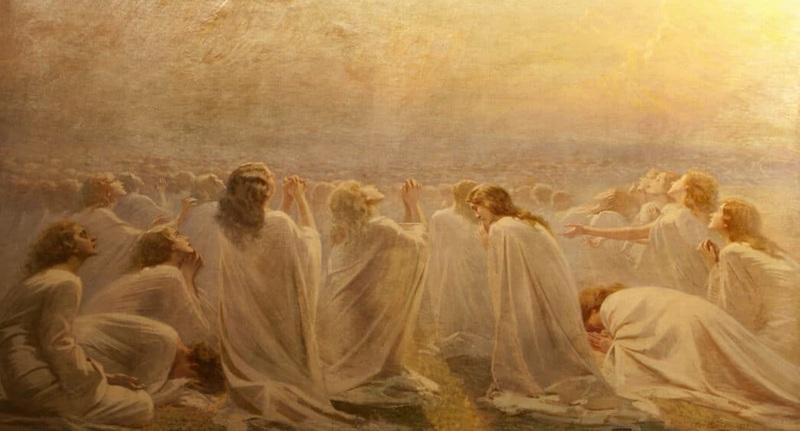
Question: How do you understand the souls under the altar as spoken about in Revelation? They are crying for vengeance on those still persecuting the saints on earth. These are saints who died, how is it that they still seem to see the unholy things of sinful men on earth? How can this be while they’re in glory, in a state of perfect bliss? Will this be the condition for all who died, until the final judgment?
Answer: In Revelation 6:9-11 John sees the souls of the martyrs under the altar in heaven. These are the believers who left their life on earth behind them and now are longing for the completion of God’s work of salvation, the gathering of his elect, and the day of Christ’s return. Of these believers particularly those who have been killed are in view in this vision. Their blood was shed as they died a violent death, e.g. they were stoned, beheaded, hanged, sawn in two, burned as torches to illumine Nero’s arena, thrown to the lions, etc., because they held to the Word of God and the testimony of Christ. These are people like Stephen, some of the apostles, Polycarp, Blandina, John Huss, William Tyndale, Guido de Brès, to mention a few; there have been hundreds of thousands in the course of church history who have been slaughtered like sheep!
John sees them “under the altar,” the altar of burnt- offering most likely, since in the OT the blood of the slaughtered animals had to be poured out at the base of the altar (Lev 4:7). The altars in the OT were made after the images God showed Moses on the mountain of the temple in heaven (Heb 8:5-6). Now John sees a symbolical vision of heaven, and underneath the altar John sees the blood of slaughtered saints. He saw the souls, for “the soul is in the blood” (Lev 17:11). They had offered themselves a sacrifice, having held to the testimony concerning Christ.
They are crying for vengeance! These delivered souls in the presence of God long for the justice of God to be avenged. They call him “holy and true,” and in his holiness and truth he must judge sinners, avenge the guilt of the wicked, and vindicate the children who remained faithful to him. He has said, “It is mine to avenge; I will repay.” For this judgment the souls under the altar cry out. Thus they present their case, their violent death in injustice, to the justice and truth of their just and almighty God! God’s honour and glory were at stake in their lot; the shame done to his name must be wiped out! These are, therefore, no unholy cries and prayers, but petitions for the holy justice of God to be revealed. Their cry for vengeance is not a sinful call for revenge, but a cry for the holiness and truth of God’s Word and name and glory to be vindicated!
What we see here as well, is that the unity of the church is not broken by death: the believers remain united in Christ. They continue to seek the completion of the work of Christ, the perfection of the plan of God! They and we pray, “How long, Sovereign Lord!” Also, “Come, Lord Jesus!” And, “Your kingdom come!” These saints remember their past, not as a cause of unhappiness but as a matter of engagement in this work of Christ, and of involvement in the justice, holiness, and glory of God! They remember their past, live in the rest and peace of the present, and long for the future completion of God’s work of salvation. They remember, just as the rich man in the parable remembered that he had five brothers on earth. The redeemed will remember God’s acts of deliverance, though this memory will be purified of the stain of anger and resentment. Even now the spirits of the redeemed in heaven know that this is no more than the intermediate state. They are yearning for the time when they will inherit “the new heaven and the new earth,” and when their Lord and they will be publicly vindicated.
These saints are given white robes and the command to rest. The white robe signifies the righteousness of Christ, the white of victory, of God’s glory and holiness. They’re given them to support and encourage them in their awaiting with anticipation the day of their vindication, the judgment of all men, and the full glory promised them. They may enjoy the eternal Sabbath, yet justice is delayed until the number of the martyrs is complete, the number of the elect will be full. It is only a “little time” until that day that every elect has been brought into the fold, until the Christ, the Redeemer, appears. Although there is already the joy of heavenly bliss, of rest and peace, there also is the excitement and anticipation of the coming of Christ, the reunion of body and soul, and the restoration of all things! That’s when the eternal glory and blessedness will be perfect and complete!
Add new comment