
A Zealous Monk and a Magnificent Message
A Zealous Monk and a Magnificent Message

In the early 1500s the glorious riches of the gospel of Christ exploded onto the Western world with a renewed understanding, marking the end of the Middle Ages while ushering in a new Reformation era.
In 380 AD, Christianity had become the official religion of the state of Rome, a status which both benefitted and hindered the proclamation of the gospel. Eventually (1054 AD), the Church split into two groups, resulting in the Eastern and Western traditions, and after further centuries of political wrangling, the Western Church unwittingly found herself in a spiritual crisis. While calls for reform had come from figures such as John Wycliffe (d. 1384) and John Huss (d. 1415), things came to a head when the formidable Augustinian monk, Martin Luther, read the book of Romans. Luther’s desire to comprehend the truth of the gospel, along with his ability to pinpoint and articulate its core, altered the Western Church permanently. God used the zealous monk in a remarkable way and the Church continues to benefit from his rekindled insights to this day.
As we reflect on the anniversary of the Reformation, we will consider the damaging theology that Luther would eventually oppose. Next, we will explore Luther’s crucial insights, which remain with us today.
Historical background⤒🔗
As we already noted, by the 1500s the Christian faith was no longer a new religion; in fact, in many circles it had become old news. We know from the New Testament that the faith had gone out through the preaching of the apostles, so that even in their lifetimes the gospel of Christ had reached “all of the Jews and Greek in Asia” (Acts 19). These efforts led to many thousands of conversions (Acts 2, 3, 8, 9, 10, 16, 17, 18, 19), and as each converted person embodied the Holy Spirit, they became another means by which God could render even more conversions. The gospel of salvation cuts to the heart of the human soul because, when understood correctly, it speaks to life’s most pressing questions. Who am I? How did I get here?
What is the meaning of life in the face of death? Why do I carry guilt, and how do I deal with it?
The early Christians faced insurmountable challenges, especially in the form of physical persecution, but by the fourth century the message of salvation had spread throughout the Roman empire until it was finally inaugurated as the official state religion. From this point in history until sometime around the eighteenth century, Christianity’s prominence on the world stage would grow exponentially. Over time fortune, fame, and politics took its toll on the leadership of the Church, and her doctrines, not to mention her members, paid a heavy price. This is the church Martin Luther knew, a church with a distinctly human hierarchy, a vast legacy of tradition and rules, and an unspoken way of understanding theology.
Doctrinal background←⤒🔗
Martin Luther became a monk in 1505. By 1507, he was ordained and began teaching in the University of Wittenberg. Some ten years later, he was nailing his 95 Theses to the Wittenberg Church door, an event which sparked one of the most influential social movements in history. To understand the depth of Luther’s insight, it’s important to contrast it with the most prominent theology at the time.
Gabriel Biel was an influential theologian whose work on God’s justification was well known at the University of Wittenberg, where Luther taught during the fifteenth and sixteenth centuries. Simply put, Biel thought that God’s justice had to do with the fact that God never goes back on his word. On the surface this is true, but, as Martin Luther would eventually point out, the way Biel applied God’s faithfulness to his work of salvation falls way short of Scripture.
Grace and justice misunderstood←⤒🔗
Biel well understood that humans are sinful, and that God must be gracious toward humans for their salvation. So far so good. What Biel and others failed to perceive is the consequence of sin. Instead, theologians like Biel taught that humans, although they are sinful and do not deserve salvation, sometimes do morally right acts. For example, one might notice that one’s neighbours’ chickens have escaped, and take time out of their day to help retrieve them. Biel might categorize this as a generally good act. Now, Biel was not so scripturally illiterate that he thought such an act earned the human any merit toward salvation. How could it, since humans are inherently sinful. Rather, Biel thought that God was pleased with such acts so that by his grace, he utilized his enormous power to decree such morally good acts meritorious for salvation. In other words, by God’s gracious decree some of the things you do are enough to earn your salvation.1

Further, Biel explained that because God is just, he will never take back his decree. Since God is perfectly faithful, never backing out of his promises, Biel thought that if God decrees that one of your deeds gets you a little closer to heaven, then that decree is permanent – regardless of what you do tomorrow. At the same time, if your actions are not good, then God will not decree that your actions have earned you anything, and by his same justice, will bring unspeakable punishment on you. Luther was taught that God’s righteousness was revealed in the act of his divine justice punishing sinners.2
Anti-gospel: Justification by works←⤒🔗
Biel’s presentation of the gospel is dark and startling for numerous reasons. For one, it leaves one desperately wondering whether it’s God’s salvation or wrath that awaits one on the day of judgement; but, far worse, it says nothing about Christ’s death on the cross.
The fact that the Church encounters harmful theology is not surprising. The apostle Peter writes that the devil is like a roaring lion, looking to devour those who love Christ (1 Pet 5:8). And Timothy warns his readers to watch their doctrine closely. Even stating that the outcome of such perseverance will result in people’s salvation (1 Tim 4:16).
As human beings we are prideful, and often conceal the truth. We are inclined to allow our sinful flesh to dominate our thoughts and our actions. Sometimes this means supplementing the gospel with a list of man-made rules which carry the appearance of godliness. At other times it means allowing our doctrine to erode to suit the latest trend. That’s why we are called to lean on God’s grace, deny ourselves, and allow our sinful natures to be buried with Christ so we can be raised with him by the power of God’s Spirit in newness of life. That’s also why it’s imperative for Christians not just to read Scripture, but to study it. By doing so, Martin Luther perceived the flaws of the theology of his day and brought the truth of the gospel back into the light.
Gospel: Justification by faith←⤒🔗
Martin Luther took seriously the idea that one might be able to perform works which would merit God’s grace, to the point of wretched desperation. In a famous passage in the preface to his Latin writings, Luther recalls the inadequacy of his spiritual state from decades earlier.
For I hated that word “righteousness of God,” which, according to the use and custom of all the teachers, I had been taught to understand philosophically of the formal or active justice, as they called it, by which God is righteous and punishes sinners and the unrighteous. Though I lived as a monk without reproach, I felt I was a sinner before God with a most disturbed conscience. I could not believe that he was placated by my satisfaction.3
Luther remembers that as a monk he lived “without reproach.” He studied Scripture, prayed continually, and followed the rules of his teachers. Yet, his conscience remained disturbed because of the inevitable sins which flow from the mind of fleshy humankind. Luther had been taught to do good works so that God’s righteous judgment might pass over him, but he was honest with himself and knew he stood condemned. For this reason, Luther feared God, and even hated him.

Of course, the story does not end there. Luther was diligent in his study and wrestled with Scripture. He understood that God is the greatest conceivable being and therefore worthy of all worship and praise, so he persevered, toiling in his studies. Finally, when he considered the text of Romans he had been struggling over in context, Luther noticed something glorious.
Finally by the mercy of God, as I meditated day and night, I paid attention to the context of the words, “In it the righteousness of God is revealed, as it is written, ‘He who through faith is righteous shall live.’” Then I began to understand that the righteousness of God is that by which the righteous lives by a gift of God, namely by faith.4 The righteous shall live by faith!
It is true that God is righteous, and that his wrath is poured out on sin. God is perfectly just and by nature requires satisfaction for the injustices we perform. Influential theologians across the centuries including Augustine, Anselm, Aquinas, and even Biel understood that humans are by nature sinful. On this the Bible is clear. In Genesis 6:5 it says that the Lord saw “that every inclination of the thoughts of the human heart was only evil all the time.” The wickedness of the human heart is the reason Adam and Eve were removed from the garden, why God destroyed humankind with a flood, and ultimately why God chose Abraham and not the other way around.
Centuries after God promised to bless Abraham’s descendants, God met them at Mt. Sinai. This time, instead of destroying them, he declared his holiness by inviting them into a relationship. He did this by explaining what he requires for people to be in a relationship with him, in the giving of the ten commandments and the rest of the law.
The Law anticipates the gospel←⤒🔗
Luther explains that already at Mt. Sinai the promise of “justification by faith” has been proclaimed. The law was not given simply because people might be able to follow through with its requirements, but to reveal our blindness and hardness of heart toward God. By reflecting on the chasm between our unbelief and the God of Creation, we might be compelled to throw ourselves upon God’s grace.5 Still, God is just, and his wrath must be appeased. So how is God’s justice satisfied if not through the law? By the only work that counts for our salvation, that is, the work of Jesus Christ.
In Colossians 2:13-14, Paul reveals the foundation on which “justification by faith” stands, writing, When you were dead in your sins and in the uncircumcision of your flesh, God made you alive with Christ. He forgave us all our sins, having canceled the charge of our legal indebtedness, which stood against us and condemned us; he has taken it away, nailing it to the cross.
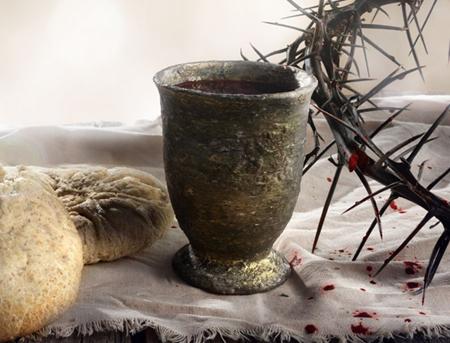
By his death on the cross, Christ drank the cup of God’s wrath because he knew that if the punishment were to fall on us, we could not bear it. And he did this “while we were dead in our sins.” Justification by faith does not mean doing the right thing, or following the right tradition, or obeying God’s law. It means looking into our hearts and throwing ourselves at the mercy of God in faith “while we are dead in our sins.” God is not waiting for us to be good before we are justified, as Biel thought – not because he does not want us to be good, but because without Christ, there’s simply nothing good that we can do!
 ←⤒🔗
←⤒🔗
Two kinds of righteousness←⤒🔗
At the same time, Christ not only carries the burden of our sin by forgiving us, but he also offers us a new life through the power of his Spirit. Luther writes on the forgiveness of Christ and the recreation of our spirits in his tract, “Two Kinds of Righteousness.” There Luther explains justification by faith in terms of “alien” and “proper” righteousness. He says that we are justified simply by putting our faith in Christ, because when we put our faith in Christ we share in Christ’s own righteousness. This is “alien” righteousness because it is not our own but comes from someone else. For those who put their faith in Christ, God justifies them because Jesus Christ is righteous. At the same time, when we put our faith in Christ, he makes his home with us, and transforms our spirits. This is our “proper” righteousness, because our own desires and attitudes are eventually converted by the power of his Spirit.6
According to Luther, “justification by faith” has to do with both. We are justified by putting our faith in Christ’s righteousness, and when we put our faith in Christ’s righteousness, he lives in us, so we are recreated.
Conclusion←⤒🔗
By the fifteenth century the essence of the gospel had slowly been eroded by time and tradition, but once it was recovered by the monk Martin Luther, it could not be contained. Luther spent the rest of his career articulating the primary theme of the gospel again and again – “the righteous shall live by faith.” The truth of the gospel is so profound and Luther’s work to promote it so effective that hardly a Protestant exists who does not know the Reformation slogan “justification by faith.” It’s a beautiful doctrine. It’s the culmination of God’s faithfulness to Adam, Noah, Abraham, Moses, David, and the people of Israel. It’s the solution to the problem of the debt of sin, and the only way to change our hearts. God displayed his promises in circumcision, his law at Sinai, and his grace on the cross. We are justified before God, even while we are sinners, if only we would believe it.
Add new comment