
Jacob Arminius and the Synod of Dort
Jacob Arminius and the Synod of Dort
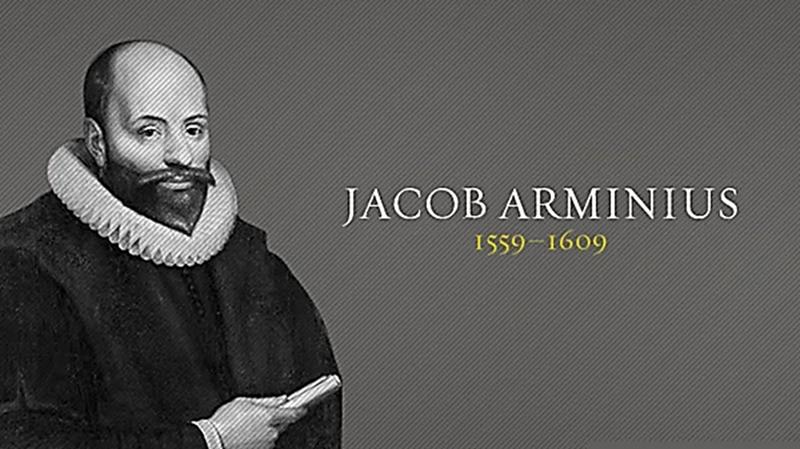
The people warming the pews of Reformed churches in The Netherlands in the early part of the seventeenth century were restless and unhappy. That’s because of the mixed signals coming through the preaching they heard. The man stirring the pot – and so unsettling the pew – was Jacob Arminius. I’d like to introduce him to you.
Youth⤒🔗
Jacob Arminius was born in Oudewater in the Dutch province of Utrecht in 1560, a few short years before the death of the great reformer John Calvin (1564). Young Jacob was orphaned at the tender age of 14, then taken in by a Reformed minister who, in 1576, sent Arminius, at age 16, to the University of Leyden. Chief instructor at this University was the theologian Casper Koolhaas.
We need to know that with the arrival of the Renaissance a century before, European scholarship allowed itself to be influenced and guided by the philosophy of long-dead Greeks as Socrates, Plato, and Aristotle. This influence popularised in Europe the notion that the human mind is able to sort out and resolve the deep questions of human existence. Those who embraced this Greek influence were known as Humanists; they typically agreed that humans are good, they defended the doctrine of man’s free will, and they questioned man’s need for God’s grace in order to achieve any form of salvation – for man had it within himself to save himself from whatever perils life put to him. Koolhaas embraced this Greek influence eagerly and did not hesitate to press this man-centric confidence upon his students, including young Jacob Arminius.
It’s not that young Arminius (or even the older Koolhaas, for that matter) disavowed his Christian heritage totally in favour of full-blown Greek paganism. On the contrary, Arminius trained to be a preacher of the gospel of Jesus Christ within the Reformed Church in The Netherlands. But his education taught him how to mix elements of humanism with his Christianity, and it’s that mix that produced the variant known as Arminianism. To put it differently, his training under Koolhaas led him to find the Calvinism of the Reformation as too stuffy, so that in turn he sought to blend Calvinism with humanism.
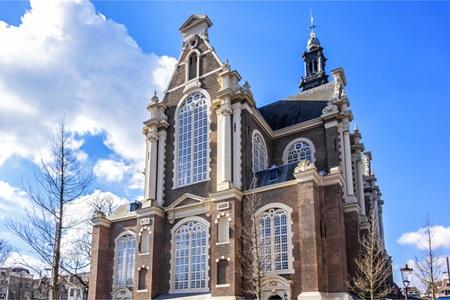
After his graduation from seminary in 1587, Arminius became minister of a large Reformed Church in Amsterdam. This congregation already had another minister in the person of Peter Plancius. The consistory quickly recognised Arminius’ exceptional gifts, and so requested their young minister to evaluate the publication of a person by the name of Dirck Coornhart (1522-1590). The Consistory sought an opinion on this publication because of what it said about human nature, free will, and the need for God’s grace.
Arminius’ response to Coornhart’s book exposed the fact that Arminius himself held faulty positions on man’s free will, depravity, and God’s grace. As a result, Plancius faulted his co-pastor minister for holding to the general goodness in man, that man had an ability to use his free will, and that man could cooperate with Jesus Christ in attaining salvation. Plancius referred to Article 15 of the Belgic Confession, a document that Arminius had also once signed: “We believe that ... original sin .. is a corruption of the entire nature of man and a hereditary evil which infects even infants in their mother’s womb. As a root it produces in man all sorts of sin.” He drew attention also to the Heidelberg Catechism’s answer to the question “But are we so corrupt that we are totally unable to do any good and inclined to all evil?” as an emphatic Yes, unless God works upon us by His Holy Spirit to regenerate us.
In his response to Plancius’ criticism, Arminius claimed he fully agreed with the confessions. He stated that though he would prefer to see some changes made to the confessions, he certainly knew himself bound to the Belgic Confession and the Heidelberg Catechism, and so he would teach and preach in full agreement with those confessions. This response turned out to be typical of Arminius’ manner of working; he was not truthful, and so what he really thought was extraordinarily difficult to pin down. This pattern repeated itself in the years that followed, and all the while the little humanist seeds Arminius sowed grew and bore fruit among his audience.
Professor←⤒🔗
In 1603, two of three professors at the University of Leyden died as a result of a plague. Arminius was appointed to replace one of them. The remaining professor at the University, Franciscus Gomarus (1563-1641), was unhappy with Arminius’ appointment. The powers that be, however, refused to give Gomarus’ concerns a hearing unless he could demonstrate, after a discussion with Arminius, how Arminius erred. Gomarus’ experience was similar to that of Plancius. He could not nail Arminius down to any error because Arminius repeatedly voiced his agreement with the Confession. At the same time, though, he shied away from openness. At Leyden he taught his students in private, and they were not permitted to publish his lecture notes.
Arminius died in 1609. His teachings, however, did not follow him into the grave. He had taught future ministers for six years, and through them his blend of humanism with Calvinism lived on. There were those in the churches who were content with this blend and many who were not. That brings us to another angle of the background to the Synod of Dort, and that’s the role of the national government. I might first add: the vacancy at the University of Leyden Arminius left at his death was filled by Simon Episcopius (1583-1643), a fellow humanist who cheerfully carried on where Arminius left off. And yes, he was a government appointee...

The national government←⤒🔗
For a thirty-two-year period beginning in 1586, Holland’s strongman was Johan van Oldenbarnevelt. Theologically he was also a humanist, and so believed that people are essentially good, have a free will, and are able to decide between good and evil. So, it’s no surprise to learn that his government was much more favourably inclined to the Arminian variant of Calvinism than to true Calvinism. Furthermore, since ministers of the gospel were on national payroll, government officials insisted they determine which minister would serve in which congregation. Given the kinship between the Arminians and the government, it invariably followed that vacant congregations found themselves saddled with an Arminian minister. As the average labourer in the land struggled with his sins and his conscience, he was discouraged to hear Sunday by Sunday that he had to contribute something himself to receiving forgiveness for his sins; he knew from bitter experience that he could not achieve a sense of having a strong enough faith.
The resulting unhappiness across the land prompted calls for a national synod, a meeting of the churches to settle the question whether there was room in a truly Bible-centred church for Arminian thinking. Does the Bible teach, or even leave room for, a God who needs people’s participation and consent before he will save them? Do people even have it in them to contribute to salvation? Despite the pressures rising from the common folk of the land, the government of the day – walking in lockstep as they did with Arminian humanism – refused permission for the churches to meet together in synod to deal with such questions. The government insisted: the state, not the churches, has the final authority in all matters of the land, including church matters. So, no synods could be held between 1586 and 1618 – to the great dismay of so many Bible students in the land who learned from Scripture that the government had no God-given right to interfere in church matters.
A synod!←⤒🔗
Given the opposition of Oldebarneveldt’s government to a synod, one wonders how a synod nevertheless could be convened in 1618. The story is intriguing and highlights the gracious and mighty work of God.
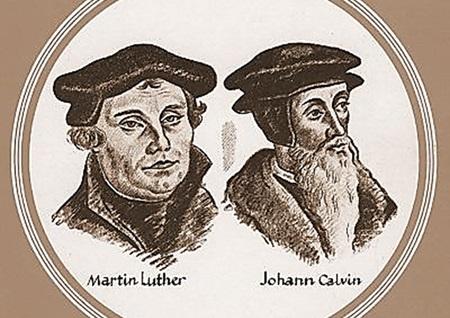
As the first decade of the 1600s gave way to the second, Oldebarneveldt’s leadership became increasingly oppressive for those who embraced the ultimate authority of God’s Word. So opposed was Oldebarneveldt to the doctrine of man’s total depravity that he set about oppressing those who embraced it. By 1617 the pressure on the faithful Calvinists was so acute that the truth of Scripture was close to being snuffed out in The Netherlands. No, the government did not impose a death penalty on those who humbly embraced God’s revelation. But to be simply biblical was not cheap; embracing the faith of Scripture could cost one one’s job, one’s land, one’s comforts. These were dark, very dark days for the godly and for the gospel of grace that formed the core of what Martin Luther and John Calvin had rediscovered in the Great Reformation.
In the midst of the darkness, the Lord God sovereignly continued his work. The royal house (under Philip William, Prince of Orange) quietly supported the Arminians and so condoned the strong handedness of Oldebarneveldt over against those who would be humbly Reformed. But as the cry of those who sought to be faithful to God’s revelation in Scripture went up to the Lord, he in mercy reached into the royal house to elevate a man who sympathized with the Calvinists. The prince’s brother Maurice was not given to religious business (he was a man of the military), but he did habitually go to church – with the Arminians. But when Prince Maurice internalised what he heard in church (man is basically good) and at the same time took in what “his”
Prime Minister Oldenbarnevelt was doing to crush those who insisted man is evil to his core, his sympathy gradually shifted to the oppressed Calvinists – so that in time he came to embrace Calvinist Reformed thinking. He concluded that Oldenbaarnevelt’s conduct in relation to the Calvinists was unjust – so that at length he publicly went to church with the Calvinists in order to show his allegiance with the oppressed. When Philip William died in 1618, this Maurice became Prince of Orange.
Upon ascending the throne, Maurice swore an oath to defend the Reformed faith, and now he made clear what he understood by the word “Reformed.” When Oldenbaarnevelt shortly thereafter encouraged his people to take up of arms to free Holland of the hated Calvinists – and even hired soldiers to help achieve that goal – Prince Maurice took bold action; to prevent civil war from tearing up his country, he had Oldenbarnevelt and his assistants imprisoned. With that action the political strength of both the humanists and the Arminians was broken, and so the Calvinists could breathe a deep sigh of relief. Maurice gave his blessing to the convening of a synod, exactly because he saw the need for the churches to examine God’s own Word on the points of doctrine that had caused so much tension in the country.
Add new comment