
Jesus Spits and Begins a New Creation
Jesus Spits and Begins a New Creation
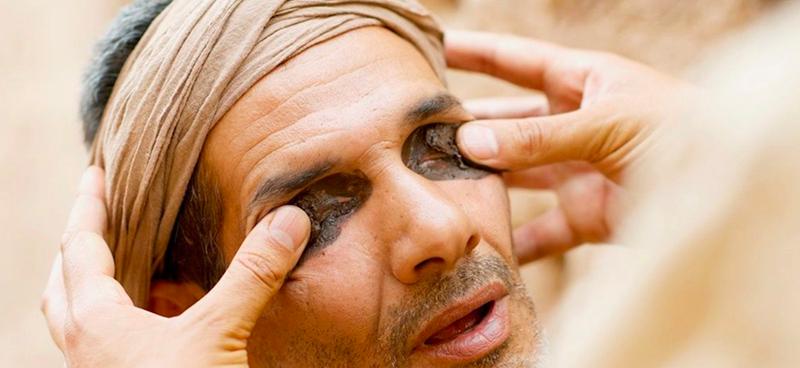
He spit on the ground, made some mud with the saliva, and put it on the man’s eyes.
John 9:6
The disciples are in a bit of a gossipy mood. They see a blind man and recognise him as the one who has been blind from birth. “Rabbi,” they asked, “who sinned, this man or his parents, that he was born blind?”
Jesus replied that he was born blind for this very moment, for God’s glory was about to be displayed in him. Having said this, he spat on the ground and made mud with his spit. Then he smeared the mud on to the man’s eyes. The ESV says that Jesus “anointed the man’s eyes” – to sort of sanitise the action. The fact is, if anyone else did this, you’d be grossed out because it is usually bad to put mud in your eyes. When people asked him later how he was healed, he seems totally amazed, not just at the fact that he was healed but how it happened: “He put mud on my eyes, and I washed, and now I see” (vs. 11 and 15).
When we read John’s account, signals go out from this story back to the very first story in the Bible – to Genesis 2: God took some dirt, made some mud and shaped it into a human being, and then, bending over the body, he breathed life into it and it became a living being. God created the first human being from mud and breath.
So, Jesus begins to recreate a human being from mud. God the Father had worked six days to create the world. Jesus must work while it is day (v. 4) because soon the night will come when he will not be able to work anymore. It is like he has only one day to recreate what has been ruined.
John indisputably presents Jesus here as God come to earth, to redeem his creation. We should not miss the fact that Jesus heals the man’s eyes so that he can see. That is especially relevant because Jesus says here, “So long as I am in the world, I am the light of the world” (v. 5). If he is blind, he cannot possibly see. So, the blind must be made to see.
As the story continues to unfold, it is clear that John wants the reader to ask himself, “Am I blind too?” That is precisely the question which the Pharisee asks in verse 40. “Are we blind too?” Yes, we are, but Jesus came to heal, so that we might see by Jesus’ light that we need to be rescued and that Jesus is the only Saviour. To restore our sight is the most important healing that I need so that I might put my faith in him.
When Jesus later meets the man again, he asks him, “Do you believe in the son of man?”
“And who is he, sir, that I may believe in him?” he asked.
“You have seen him, and it is he who is speaking to you.” You have seen him because your eyes have been healed. Jesus is the recreator, and he has recreated this man’s eyes. What he really wants, however, is to recreate his broken spirit so that he believes in him. So he did.
“Lord, I believe,” the man said, and he worshipped him. That’s what it is all about. Our Saviour is our God. Our God created the world, but it got broken, so he came back to save it. Only he could restore it without making a terrible mess of it. He will restore it to become something beautiful. For if a man makes mud from spit, smeared it on the eye of a blind man to heal him, then he can restore my sight and make me see, too.
For Reflection⤒🔗
He is the creator. He could just make you believe. But he invites you to make a decision: “Do you believe?” (v. 35). Tell him you’d like to see him, and he will heal your eyes and you will see.
Add new comment