
A Story about a Pastor and a Pandemic
A Story about a Pastor and a Pandemic
The city had been in tumult for months. The Duchess was beside herself with anger at the rebukes that she was receiving from the fearless pastor. He was about to be dismissed. And then the pandemic hit ... What happened?
Neuchâtel, Reformed city⤒🔗
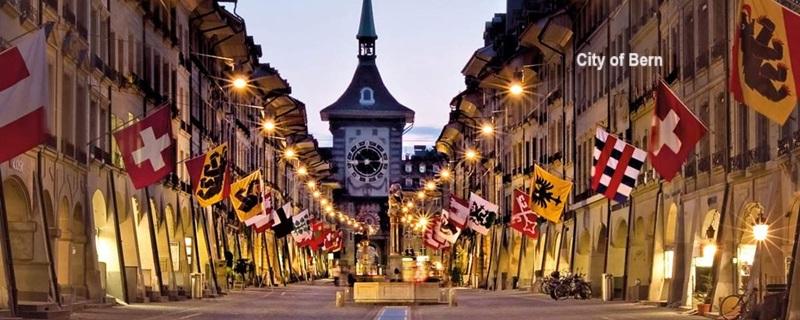
The year was 1539, and the city was Neuchâtel, a Swiss city north of Geneva. Some nine years earlier, in 1530, it had chosen to follow the way of reformation under the leadership of Guillaume Farel. Soon, the city council had established four ministers to serve the population. One would think that by 1539 Neuchâtel had come to be quite Reformed, but real change takes time, and the morals of the people left a lot to be desired. Besides, their reformer Farel had gone on to Geneva to secure it for the Reformation as well. He had worked in Geneva from 1533 until April 1538, when he, Courault, and Calvin were dismissed, not for any fault of theirs, but because they refused to administer the Lord’s Supper with the city full of tumult and the people refusing to swear to their confession of faith. The three preachers had been banished from Geneva, and thus Farel had returned to Neuchâtel to take up the ministry there once again.
Confrontation with nobility←⤒🔗
But now, after only a year, Farel was in danger of being dismissed from Neuchâtel as well. The wife of the governor, the wealthy Duchess Jehanne de Rives, was complaining about his rebukes. She had written to the four ministers, asking that Farel be replaced. Why? Her second daughter had married a nobleman, had two children with him, and then left him. It appears she was living at her parent’s home (more details not known). Farel found this to be unacceptable and began to rebuke her privately. After some months, he began to preach about faithfulness in marriage, without mentioning names. In defence of her daughter, the Duchess then incited a mob to assemble in front of the church building after one of Farel’s sermons, shouting that it was time for Farel to go.
Advice from friends←⤒🔗
Farel asked his friends for advice. Calvin and Viret advised him to stand firm, mentioning for comparison that Herodias's daughter had wickedly led Herod to behead John the Baptist. They also referred to the governor as a Judas, who was betraying the Lord’s cause. But there was one more player in this game: the powerful city of Bern. Technically Farel was their missionary, and they advised that he should go elsewhere. Farel refused. Calvin's most detailed biographer writes, ŏBerne could not but have had a certain respect for Farel, for this daring missionary who had conquered for the Reformation ... nearly all the Swiss Romande, always in the midst of great struggles, often in danger of his life. But Bern was animated by a very authoritarian spirit...”
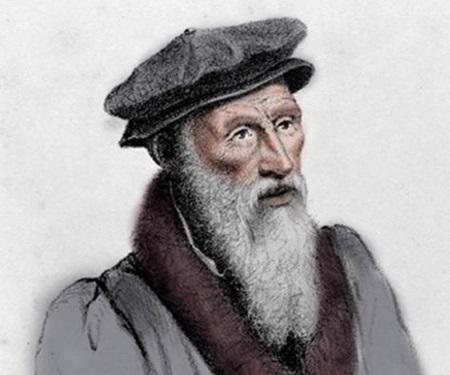
Farel and his friends appealed to all the surrounding churches in the Swiss Romande and received support. The churches recognized that it was important for Farel to establish some kind of discipline, that high morals and good order were essential to the reformation, lest the Roman Catholic accusation that the Reformation bred disorder and immorality should prove true.
Take a call?←⤒🔗
The difficulties continued for two years, during which Farel never ceased his preaching or pastoral work. The Reformed churches of the area supported Farel, as did his colleagues. On August 30, 1541, the church of Geneva asked Farel to help Calvin in his return to Geneva. Farel’s opponents in Neuchâtel seized the opportunity to induce Farel to take a call to Geneva. He absolutely refused to consider it, being convinced that the troubles in Neuchâtel were an indication of how greatly the city needed his preaching, whether at great personal cost to himself or not. To leave would dishonour the call he had received and the very Word he had preached. It would represent the triumph of the papists and the ruin of his ministry. Yet even this wonderful commitment on Farel’s part would not quiet his foes.
The pandemic hits←⤒🔗
Then the pandemic hit. The plague – the bubonic plague, in its second wave, far more deadly than COVID-19. A sixty to ninety percent death rate. In late October 1541, this deadly plague stole into Neuchâtel. The best advice was to flee town as fast as possible, wait it out, and return slowly. What about the pastors? The city council of Geneva at that time forbade Calvin from visiting at their hospital, in order to spare him. This did not sit well with his conscience. Three years earlier, Farel had visited his own nephew, who was within a day or two of death by plague. About six months prior, two good friends of Farel had died from the plague. These men knew how deadly the plague was, but they also felt that God called them to comfort the sick and dying.
Faithful, loving shepherd←⤒🔗
What to do in Neuchâtel? What would a good shepherd do, as he follows Christ? Farel fearlessly visited the sick and comforted them. He did not in any way exclude those who had opposed him. He wanted all who died to die in the faith, right with God, at peace. Farel’s love was noticed. A few months later, his colleagues would reflect, Already, by the grace of God, the people were running more fervently and numerously to hear the Word, not only because of the sermon, but because this pastor was so attentively visiting the sick every day and comforting them in keeping with all his duty and all his love. What is more, according to the precept of Christ, if anyone had been violent in his enmity against him, he was pursuing him with a very great affection, and tried very hard to give more of his service.”

Guidance for visiting the sick←⤒🔗
Such actions of Farel were in keeping with his own guidance for fellow pastors, as contained in some directions he gave for visiting the sick. These were added to a collection of liturgical forms, first written by hand in 1528 and then published in 1533. There Farel wrote, The one who bears the word of our Lord ... must also teach from house to house and everywhere, as Jesus and his apostles did, comforting the afflicted and above all those who are sick. To them he must announce the very great goodness and mercy of God, demonstrating that nothing but good can come from him who is the fountain of all good, and that he who is almighty is our ever-merciful Father. He must show that our Father is more attentive to us than any father or mother was to his or her son, reminding them that although a mother may forget her child – and a mother nurtures the very one that nurses at the breast, that she carried in her womb! – yet our Father will not forget us, turning everything to our benefit, sending everything for our advantage...
Therefore we must submit our spirit to him and believe firmly that he loves us, and loving us, he chastens us ... that we are all the more in his grace, looking not to those who flourish in this world with their comforts, but to Jesus...
The true evangelist must work faithfully in this to draw and carry the poor sick one to our Lord, exhorting the servants who are near the ailing patient to comfort him and exhort him in our Lord. And if the minister has something with which he can offer comfort – also bodily – such as bread, wine, fruits, or anything else, he shall spare nothing, showing to all a true example of love. He shall frequently visit the sick to comfort and strengthen him as much as possible by the word of our Lord and wherever possible also help the poor afflicted body.
Pastor Farel confirmed in his office←⤒🔗
Farel's love for his flock, including for his opponents, did not go unnoticed. On November 26, 1541, the Council of Neuchâtel decided that “the said Farel must always remain and continue in his ministry and office, all the more because we cannot mistrust him nor take anything away from his life and doctrine, considering also that he is the first one who brought to us the gospel truth and by him the Lord God showed us great grace and mercy.” 1
It goes without saying that the love of Christ must be shown to all those who are sick, especially in a time of crisis. The Lord may use these situations to increase the hunger for the gospel. He will give us increased opportunities to share the gospel message. Let us take some encouragement from the fact that the church has faced much worse pandemics than what we are facing today, and our loving heavenly Father carried his people and their pastors with the good news of Jesus Christ.
Add new comment