
Reforming the Church Service: Addresses on Worship
Reforming the Church Service: Addresses on Worship
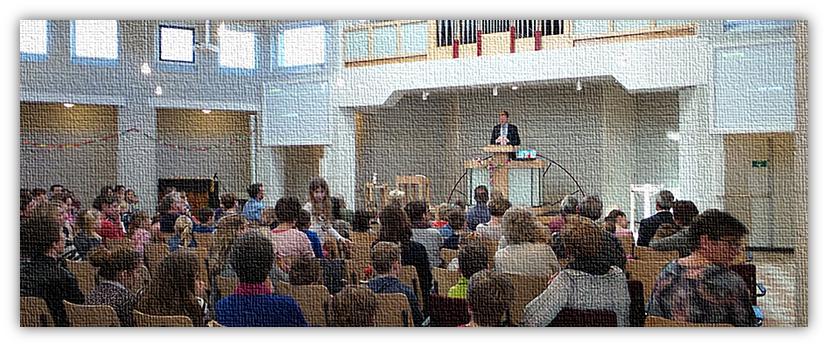
"Liturgy." It sounds like "allergy," and that's perfect, because many Christians today have an allergy for liturgy. Actually, the idea's very basic: certain things should always be done in a worship service, other things shouldn't. And you need some set of criteria — a rationale, for what's in and what's not.
Every church has a liturgy. In the Bible churches and Baptist fellowships of my youth, the liturgy was pretty much the same Sunday to Sunday, and even fairly standard from church to church. You knew what to expect and had a pretty good idea of when to sit, stand, and reach for your hymnal or wallet.
During my teen years, though, I spent some time in charismatic circles. Here, we used to ridicule the Baptists as "traditionalists" who stifled the Spirit by the church bulletin. Imagine what we thought of Presbyterians, Episcopalians, and Lutherans! Goodness, they were really "dead traditionalists." And "dead" didn't refer to the doctrine, because it didn't matter whether a church was liberal or conservative. It could have been the most orthodox church in town, but if its style was not youthful and lively, it was "dead," plain and simple. Doctrine didn't decide death or life, the liturgy decided it. Isn't that ironic, that in our charismatic circles we were willing to divide churches over liturgy just as surely as we thought others had done! We were just as caught up in liturgy, by demanding a particular youth-oriented, guitar-strumming, hand' waving, informal style, that we ended up defining life and death in churches by our particular liturgical definitions.
Once we realize that we all have a liturgy — a philosophy of worship and a general set of criteria by which we judge it, we can begin to ask ourselves and each other, what then is a biblical liturgy? If God is the one who must be pleased with our worship, then he should decide — not the youth, nor the older folks, nor the unchurched or the churched. It's our job to find out how God wants to be worshipped. After all, he is the audience: it is he who must be pleased with our worship, for ultimately he is the Seeker to whom we must be sensitive (Jn. 4).
I remember, when I began attending Presbyterian and Reformed churches, how it was both foreign and familiar. My new theology told me that God was the center of attention, so seeing him held up in the service, from the call to worship to Word and Sacrament, to the Benediction, clicked for me. You see, before, I was attending Arminian churches whose human-centered theology shaped a human-centered liturgy.
Endless autobiographies called "testimonies," tacky religious floor-shows, an interminable altar call begging folks to let God have his way, and a centrally-located choir with colorful robes framed a sermon of schmooze calculated to please me and make me want to go through this thing again next week. Now, of course, not all of the churches nor all of the services I can recall were as goofy as I'm describing here, but you get the picture.
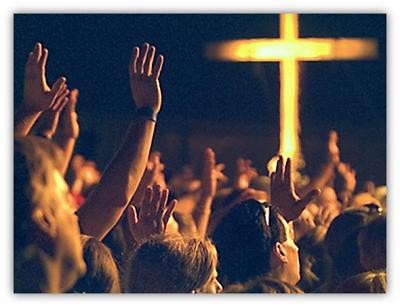
So, it's not whether liturgy, but which liturgy. It's not enough to say, "It should be old"; nor is it acceptable to judge it by how it appeals to the youth. What are the biblical criteria for judging our worship? That's the only question.
So here I offer seven guidelines that you might find somewhat helpful in analyzing your worship. It may be something that you could take to your worship committee or pastor.
1. It must conform to Scripture by preaching Law and Gospel, along with sermon and sacraments. The sermon isn't the only "preaching" of the morning. The entire service is worship and says a great deal about the church's view of God, Christ, salvation, etc. Is there a regular confession of sin and announcement of pardon? This is not only an ancient requirement of the Christian churches; it is part of the apostolic worship, as you find it in Acts chapter 2, for instance, and in Paul's letters.
2. It must link the individual to the larger church body and not only to the church here and now, but to Christ's body throughout, the world and throughout all ages. Is our worship uniquely American or determined by the "contemporary"? This isn't just a question of style, but of doctrine. We worship with the "cloud of witnesses" (Heb. 12) and the Psalms are full of the recounting of God's works with his people throughout history. We aren't individualists who are seeking a "worship experience" that's relevant to us, but baptized Christians who are in covenant with the "communion of saints" and "one holy, catholic, and apostolic church" (Apostle's Creed).
3. It must be God-centered, not us-centered. God is the audience and we are the choir. Are the "professionals" up front the focus of attention? Are they entertaining us or are they leading us in corporately entertaining God? Where is the focus?
4. It must worship the correct God correctly. The first three of the 10 Commandments concern our correct worship of the only true God. God is more concerned with true worship than with anything else. Even our salvation is a means to that end of bringing praise and glory to God's name. It isn't enough to worship the true God according to our own fancy; he must be worshipped in his own way, as Aaron's sons learned the hard way. When they wanted to offer an unauthorized fire in the temple, it was out of the best of motives, but God turned them to ash before Aaron himself. "Before man, I will show myself as holy," God declared. We must not trifle with God in the matter of worship.
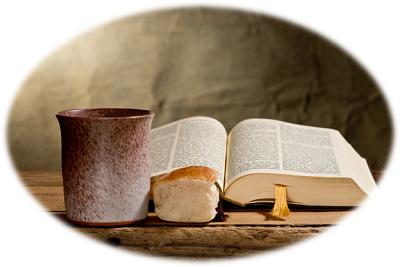
5. It must emphasize and undergird Word and Sacrament as the central foci of worship. Is "fellowship" more important than the sermon and Holy Communion in our church?
6. It must be useable. In other words, we have to instruct people in anything that is unfamiliar. One reason people will say, "It's just rote repetition" of ancient liturgies is due to the laziness, apathy, or lack of awareness on the part of the minister in terms of explaining it all. We can't assume that each new generation understands what's going on.
7. It must communicate to contemporary men and women. The Reformation recovered congregational singing and participation. No longer left to the "professionals" (the choir, etc.), the entire congregation read the Scriptures in unison, prayed in unison, and sang in unison. But that meant that they had to have it in their own language, so the Reformation neither shirked its obligation to the past, nor to the present and the future.
Add new comment