
Pastoral Guidance for the Administration of the Holy Supper
Pastoral Guidance for the Administration of the Holy Supper
The meek shall eat and be satisfied.
Psalm 22:26
He feeds with good the humble soul And satisfies the meek; And they shall live and praise the Lord, Who for His mercy seek.
The Lord has, in addition to the administration of His Word, also instituted two sacraments to strengthen the faith of His children. Of those two sacraments, the Holy Supper is one of the most holy and precious events that take place in God's church here on earth. It is no wonder that many of God's children are assailed by the adversary and that there is so much strife in their souls, because the administration of the Lord's Supper is a special event in the life of God's children, and Satan always tries to hinder and obstruct this special event. There are also many people who struggle with questions for which they have no answer, and others who have wrong ideas regarding the Lord's Supper. It is therefore the desire of my heart to give the readers some guidance in this respect.
The sacrament of the Holy Supper directs us to Christ's perfect sacrifice (once offered on the cross) as the only ground and foundation of our salvation. That which is heard in the preaching of God's Word is made visible in the Lord's Supper. Under the signs of broken bread and poured-out wine the only all-sufficient offering of Jesus Christ is presented to His children.
It is very understandable that many of God's children experience a spiritual strife when the administration of the Holy Supper is announced, because the certainty of being a child of God is not always there, and the fear of eating and drinking judgment to themselves oppresses their heart. It is, on the other hand, still a good sign that there is strife in the soul, because there are also people who know nothing of that strife, or who even do not want to know anything of it. For them the Lord's Supper is a mere form, something which is done automatically and is not preceded by spiritual exercises in the soul. Then there are others who stay away from the Table of the Lord out of fear of deceiving themselves, and because they lack the knowledge and do not see the purpose and the essence of the sacrament.
Since it is my objective to provide some guidance in the correct use of the Holy Supper, it is my prayer that the Lord may use these few words as a means in His hand to come to a true self-examination by the light of His Word.
In remembrance of Me⤒🔗
The Lord has instituted the Holy Supper in His Church so that it will be held regularly until He come; it is a lasting institution in remembrance of Him. When the Table of the Lord is being prepared in the congregation, we must be filled with holy reverence and spiritual thoughts regarding the essence and contents of this visible preaching of the death of Jesus Christ. 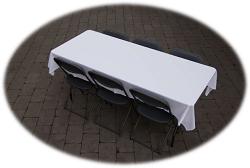 It is the Table of the Lord, and God's children must prepare themselves to meet the Master there, because He alone is the Center of the Holy Supper. If there are some of God's children who live careless lives and who do not attend the Lord's Supper regularly, they must blame themselves and examine their souls thoroughly, for they will bring the Lord's displeasure on themselves and darkness in their souls. It is a commandment of love.
The Lord's Supper is, on the other hand, not a matter of course either; everyone must prepare himself and examine himself in meekness and prayer before the countenance of the Lord. That is the reason that a preparatory sermon is preached in the congregation the Sunday before the Holy Supper, to provide some guidance for this self-examination and to spur those who are afar off to exercises of faith in Christ, because, again, He is the Center of the Holy Supper. The tender faith in Christ longs for the use of the Holy Supper, and as the natural body cannot live without natural food, it is impossible for the spiritual body to live without the food that the Lord Jesus Himself has given. It is a sad spiritless situation where the longing for the Lord's Supper is lacking, or where the Holy Supper has fallen into a dead form. In both cases the ordinance of the Lord is being held in contempt.
For whom has the Holy Supper been instituted?←⤒🔗
This is a very important question indeed, and a personal question as well. Is it for me? Everyone must search his own soul with this question. There are many people who exclude themselves from this question, and are only busy with judging others. This is a very grave mistake and a sin before God. The Lord alone knows the heart. "Judge not, that ye be not judged," and "Everyone examine his own conscience." In self-examination we are dealing with personal discipline; it is an act of faith, and if we profess that we do not have faith ourselves, how can we judge someone else's faith? If we are truly concerned about our own relationship with God, then there is no time left to judge others.
 True self-examination must be the sincere frame of true communicants. Self-examination deals with a living knowledge of misery, deliverance, and gratitude. Is that not what the life of faith is all about? Those three parts characterize the life of the real Christian. Although true communicants must have a beginning knowledge or a more advanced understanding of those three parts, the measure of it is not to be determined by us. We are not speaking about one part only, but about three parts. Where saving knowledge of sin is present, a knowledge of salvation is found also. When the publican prayed, "God be merciful to me a sinner," we can say that his begging for mercy is proof that he knew something of God's grace. Where a knowledge of sin and of grace is present, there is also a knowledge of gratitude. Is it not a wonder that the Lord listens to such a one? Can we not speak of amazing grace when we experience that He inclines His ear to such a wretch and that He will regard the prayer of the destitute? Then there will also be humble gratitude in our heart, and a song in the soul, "I pledge Him my devotion." The love of God will then be ablaze inside of us, and we will highly esteem His precepts and ordinances.
To strengthen faith←⤒🔗
As the sacrament has been instituted for the strengthening of faith, it can only strengthen something that is there. The thought that the Holy Supper can also work faith is therefore cut off. The implanting of faith is only wrought by Word and Spirit. Attending the Lord's Supper is an act of faith, and it assumes a discerning knowledge of, and the heart's choice for, the Mediator Jesus Christ. That little plant of faith may still be very small and tender, but it must be there.
The Holy Spirit gives us a living spiritual knowledge of our own heart, which works out three things:
- A belief with our whole heart of our damnworthy state, which in turn works a loathing of self and a humbling before the Lord.
- A seeking, by faith, of salvation outside of ourselves in Christ Jesus.
- A fleeing and seeking by Christ's power to walk in evangelical obedience.
No worthiness in self, but only in Christ←⤒🔗
True self-examination is not meant to find worthiness in ourselves, but on the contrary, to see all worthiness in Christ alone, and at the same time experience our own total unworthiness. It is not a digging in our own heart, because we will never find anything there that will make us worthy guests at the table of the Lord. The deeper we put our hand in our bosom, the more reasons we will find not to attend, and that is exactly what Satan wants. In the examination of ourselves we must consider our relationship with Christ, and we must by faith look to Him with our poverty and our needs, believing in what He wants to be for His children. A true examination of self reflects on what He has done and what He has promised. The Lord Jesus must always be the focal point.
What we need then is not in the first place an established knowledge of our faith in Christ, but a living out-going to Him. This is also accompanied by a hungering and thirsting after Him, a being unable to live without Him, a longing to know Him as my personal Surety, a fleeing to Him, and a beseeching, "Lead me to the Rock which is higher than I." The exercises of faith are directed to Him, and that always goes together with a turning away from self, and a seeking refuge in Him with all our sins, guilt, and unworthiness.
The more a person is established in faith, the more he realizes his own unworthiness and sinfulness, and the more he needs Jesus. All God's children, also those who are established in grace, come to Christ as helpless and needy ones, yea, as in themselves lying in the midst of death, so that they may receive food out of His fullness. In true self-examination the exercises of faith are directed to Him alone. The Holy Supper urges God's people to go to Jesus with their poverty, and in that way to seek their salvation outside of themselves. He is the only all-sufficient Savior. "For it pleased the Father that in Him should all fulness dwell" (Colossians 1:19).
 His hands are pierced hands, full hands; He breaks His own body and He pours out His own blood, and He is the One who says, "Come hither, for all things are ready." He wants to give to sorrowing and self-condemning children of God gold tried in the fire. He has woven a garment for them so that the shame of their nakedness would be covered. He gives beauty for ashes, the oil of joy for mourning, and the garment of praise for the spirit of heaviness. Those who seek marks of grace and worthiness in themselves become self-righteous people, who keep the truly hungry hearts away from the table of the Lord.
When the Holy Spirit with His discovering light shines in the heart and uncovers our sins, the little ones find that to be a reason to stay away from the table. That is, however, not the purpose of God's Spirit. When one of little faith finds nothing but sin in his heart, he should not stay away from the table of the Lord, but he should, lamenting his sins, flee to the Lord Jesus, because He calls us.
When the Heidelberg Catechism asks in Question 81: "For whom is the Lord's Supper instituted?" it gives the following answer: "For those who are truly sorrowful for their sins, and yet trust that these are forgiven them for the sake of Christ; and that their remaining infirmities are covered by His passion and death."
Evangelical penitence←⤒🔗
Evangelical penitence always goes together with the evangelical exercises of faith. There are people who say that they know something of the first part, but know nothing of the second part, and are there not many who live on in this way for numerous years? This, however, is not an evangelical knowledge of sin. Saving repentance and a knowledge of our own heart cause us to become active in the begging for grace. The Holy Spirit does not work by halves, but He leads the sinner to Christ. To talk about sin without fleeing to Christ makes us a companion of Cain, who did indeed speak about his crime, but who revealed himself in unbelief, saying, "My punishment is greater than I can bear." Sinful unbelief can reign so much in the heart of the little ones in faith that they often think that their sins are too many. The first thing they do, therefore, is to improve their lives to make themselves acceptable before the Lord. That is, however, a legalistic servitude.
Evangelical penitence is always connected with evangelical exercises of faith toward Christ. Loathing and abhorring of self goes together with a fleeing to Jesus, a finding shelter in His wounds, and having a childlike trust in His Word. God's children need Him as their Prophet, to learn from Him the way that they should go. And yet, even if it is but for a very short moment because of the weakness of their faith, at that very moment there is the trust that their sins are forgiven them for the sake of Christ. For he who is driven by sin and guilt and flees to Christ has a true and sincere trust in Him. He exercises faith in the merits of Christ, and at that moment he rests in His grace. Such a trust belongs to the essence of faith.
Not for the established in faith only←↰⤒🔗
The Lord's Supper is for all true believers who seek their salvation outside of themselves in Jesus Christ. There is a constant desire in their heart to strengthen their faith more and more, to be established in Christ, and to live acceptably before God's holy countenance. They cannot continue to remain doubters, for that is exceedingly burdensome to them and not to the honor of God.
Those who are established in Christ also need this establishing grace, so that they also desire to strengthen their faith. They cannot live without that spiritual manna either, because they also experience that their basket is empty again every morning. Each day they have to go out of their tent to gather the manna, and each day they have to stoop down to fill those empty baskets. What a wonder that it was there every day! "And they did eat manna, until they came unto the borders of the land of Canaan." It is the daily need of a child of God to be fed and strengthened by Christ until he comes unto the land of rest.
God's child cannot live without Him. What a blessing it is when we may know His table to be the table of our heavenly Bridegroom. Yea, His flesh is meat indeed, and His blood is drink indeed. Here is a picture of the frame of a true communicant. What Jesus is and what He has done is the center of the Lord's Supper. It is His table, His body and blood. It must become in your heart:
Give me Jesus, else I die,
For outside of Jesus is no life,
But eternal soul's destruction.
Those who are strangers of these matters are admonished to keep themselves from the table of the Lord. They who seek their salvation outside of Jesus have no part in Him.
Those not attending←⤒🔗
Until now I have said something about the true frame of the little ones and also the established ones in faith. But the Holy Supper is administered in the midst of the congregation. How are things with all the others who also live under the administration of the covenant of grace? When the Lord's Supper is administered in the congregation, there are also many spectators. Is that not a sad situation?
How clearly is revealed herein the state of death wherein a great part of the congregation is sunken down. It should sadden us and urge us to ask the Lord if He will send His Spirit to work powerfully in the congregation, so that His regenerating and renewing work may prosper among us. As far as this is concerned, the Lord's hand is so still. Jesus once said, "And other sheep I have, which are not of this fold: them also I must bring" (John 10:16). It is my hope and expectation that the Lord would send His Spirit to accompany the preaching of the Word, so that many (also our young people) may be added to the church among those who should be saved.
There are also people among us who are not even spectators, but who stay home because the service is too long. Are there others who do come to church, but only to judge others? Let such an evil not fester among us, but pull it up by the roots. Then again, we find people in our midst who excuse themselves and hide behind the thick wall of their dead passiveness.
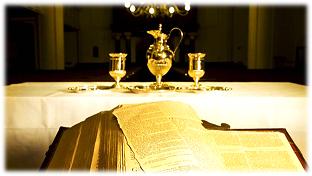 It is, however, not less sad when others come to the table of the Lord out of custom. For them the Holy Supper is nothing more than a pretense. Those people take historical faith to be true saving faith. God's Word calls them hypocrites, and they are those who do not truly repent toward God with all their heart. They are deceiving themselves, pretending to be God's children with an outward conduct and feigning to possess faith. They act and walk as true believers, and they sit at the table of the Lord, but their heart yearns for the world. They do not discern the Lord's body, they do not know the spiritual communion with Christ, and they eat and drink judgment to themselves. They do not belong at the table of the Lord, and they bring God's displeasure and wrath over themselves, for He will visit the sin of hypocrisy. The church cannot exclude the hypocrite in any other way than by the key of the preaching of the Word, for she may not and cannot judge the hearts.
There are also among God's children those who do not repent toward the Lord with a sincere heart, because they experience periods of deep decline in their spiritual life. When certain bosom sins rear up again, such people can sink very low and come under darkness for their soul, and the living soul-exercises with Christ are not there anymore. When such persons attend the Holy Supper, the Lord's displeasure will rest upon them. Oh, it is so necessary that there is a breaking with sin and a heartfelt return to the Lord, because only then will He speak to their soul again. The relationship between God and His children is so tender.
When a child of God lives in unbelief and when his heart is turned to sin and the world, he is also not "discerning the body of the Lord." When sin is allowed to live in the heart, we grieve the Holy Spirit, and then unbelief and the power of sin is strengthened. Unconfessed sins are unforgiven sins.
Many of God's children are assailed by Satan regarding the knowledge of their sins. Especially the little ones in grace are often afraid to eat and drink judgment to themselves. They do have a knowledge of self, but is it enough? They do hunger after Christ, but is it enough? They hate sin and desire to live holly before God, but it does not work at all. Despite all their attempts at betterment, everything is getting worse. Their hearts tremble at the thought of not discerning the body of the Lord. Should they keep away? Or stay home? And in this way Satan tries to put stumbling block after stumbling block in their path. Is there room for such a one at the Lord's table? Yes, there is, for the King is calling, "Come unto Me, all ye that labour and are heavy laden, and I will give you rest" (Matthew 11:28). He promises, "To this man will I look, even to him that is poor and of a contrite spirit, and trembleth at My word" (Isaiah 66:2). The meek ones, the broken hearted ones, shall eat and be satisfied, and they shall praise the Lord.
Be ye reconciled to one another←⤒🔗
 I want to mention yet another matter that is automatically included in the repentance toward God, and that is to be reconciled with our brother. God's children are members of the same body, children of the same household. A very special bond, the bond of faith and of love in the Lord Jesus Christ and of the blood of Christ, binds them together. God's children live under the commandment of love. "A new commandment give I unto you, That ye love one another" (John 13:34). This love must be expressed in a special way at the table of the Lord.
To be reconciled with one another is different from saying, "I have nothing against him," or "I do not have any enmity in my heart against her." To be reconciled with one another is to love each other for Jesus' sake, and that, too, is a crucial part of repentance toward God with a sincere heart. When I say that I love Jesus and I hate my brother, I am a liar. There is such a tender relationship between the Lord and our soul. May we always pray for a cleansed conscience for these matters.
How fruitful can the regular observances of the Holy Supper be! There must always be an urging to examine ourselves again and again, so that we, who are so slow of heart, may be encouraged to increase in the grace and knowledge of the Lord Jesus Christ.
Some heart-searching questions←⤒🔗
In closing, I would like to lay some questions before you:
- Do you often bring your heart before the Lord to be examined by Him?
- Have you been uprooted from the grounds of your own righteousness?
- Is Jesus precious and necessary to you in the way that He reveals Himself?
- Is He altogether lovely to you?
- Do you desire Him as your Prophet, Priest, and King?
- Do you desire to bear fruit in Him?
If you may answer these questions in your heart with a "yes," then do not let anyone or anything hinder you or disturb you, but go with liberty to Him who calls and who is faithful. Know that the dying Surety has instituted the Holy Supper for your comfort and strengthening.
It is my prayer that the Lord may bless this brief meditation, not only for your personal life, but also in the midst of the congregation. If an arrow has penetrated into your heart, I would say, "Do not extinguish that discovering light, but bend your knees with these convictions and confess your follies. Acknowledge your sins before the Lord and beseech Him for a divine right to commune at the table of the Lord, not as a hypocrite, but in truth. He is a merciful God."
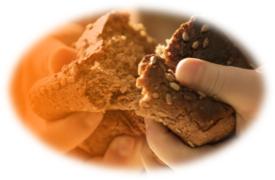 I also hope that some of your soul's riddles have been solved and that the fruit may be a quiet desire to proclaim His death. It is also possible that not all your fears have been taken away, and that the big question in your heart still is: "Is it truly from the Lord? Are my soul's experiences the work of the Holy Spirit?" Remember then that Jesus revealed Himself to Cleopas and his friend in "breaking of bread" (Luke 24:35).
"Arise and eat; because the journey is too great for thee. And he arose, and did eat and drink, and went in the strength of that meat forty days and forty nights."1 Kings 19:7-8
Add new comment